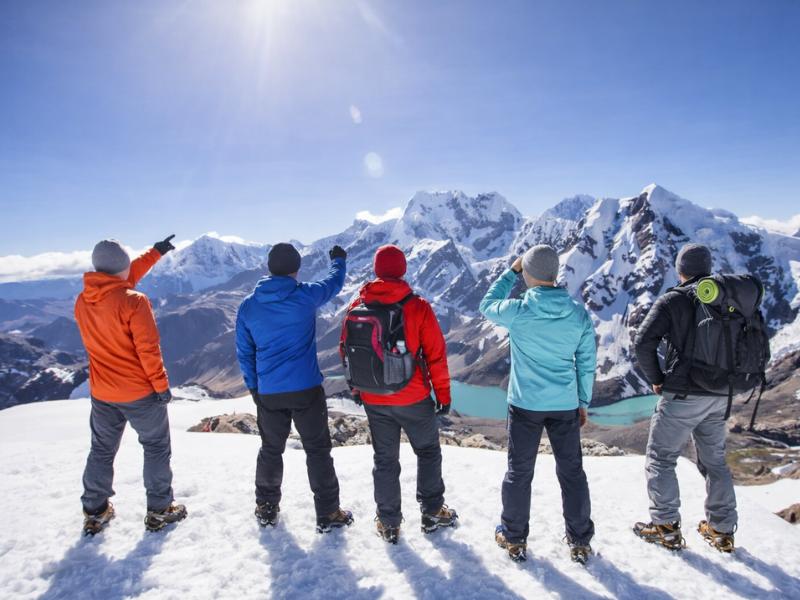
Best Guided Andean Cordillera Blanca Adventures in Peru
Book the best Santa Cruz Trek tours in Peru’s Cordillera Blanca. Hike stunning 4-day routes past turquoise lakes like Llanganuco, snow-capped peaks (Alpamayo, Huascarán), ancient Quebrada Santa Cruz valleys and high passes on small-group or private expeditions from Huaraz. Camping, meals, porters and professional guides included. Secure your unforgettable Santa Cruz trekking adventure today!
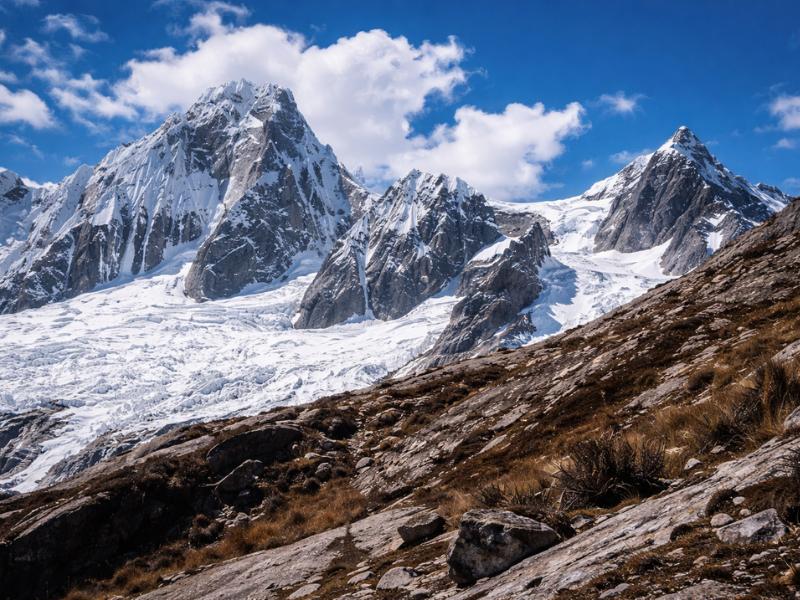
Our best-selling Santa Cruz Trekking tours explore Peru's stunning Cordillera Blanca with multi-day hikes through high Andean passes, turquoise glacial lakes, and snow-capped peaks like Santa Cruz and Quitaraju.
Santa Cruz 4-Day Trek in Cordillera Blanca This 4-day guided trek explores the stunning Cordillera Blanca from Vaqueria through Huascaran National Park. Hike past alpine lakes, glaciers, and peaks to the breathtaking Alpamayo viewpoint. Meals, water, camping gear, and a support mule for luggage included.
This private 4-day hike from Huaraz explores the stunning Cordillera Blanca. Trek across high passes and meadows with provided tents, sleeping bags, mats, and gear. Donkeys carry heavy loads for a lighter journey. Hotel pickup/drop-off included – personalized service and breathtaking Andean scenery without the hassle of equipment.
This epic 20-day high-altitude expedition from Huaraz combines the classic Santa Cruz Trek with technical summits of Alpamayo (5,947 m) and Chopicalqui (6,354 m) in the Cordillera Blanca. Enjoy ISO 9001-certified safety, exclusive high-mountain rescue support from Socorro Andino Peruano, and Starlink satellite internet for constant connectivity.
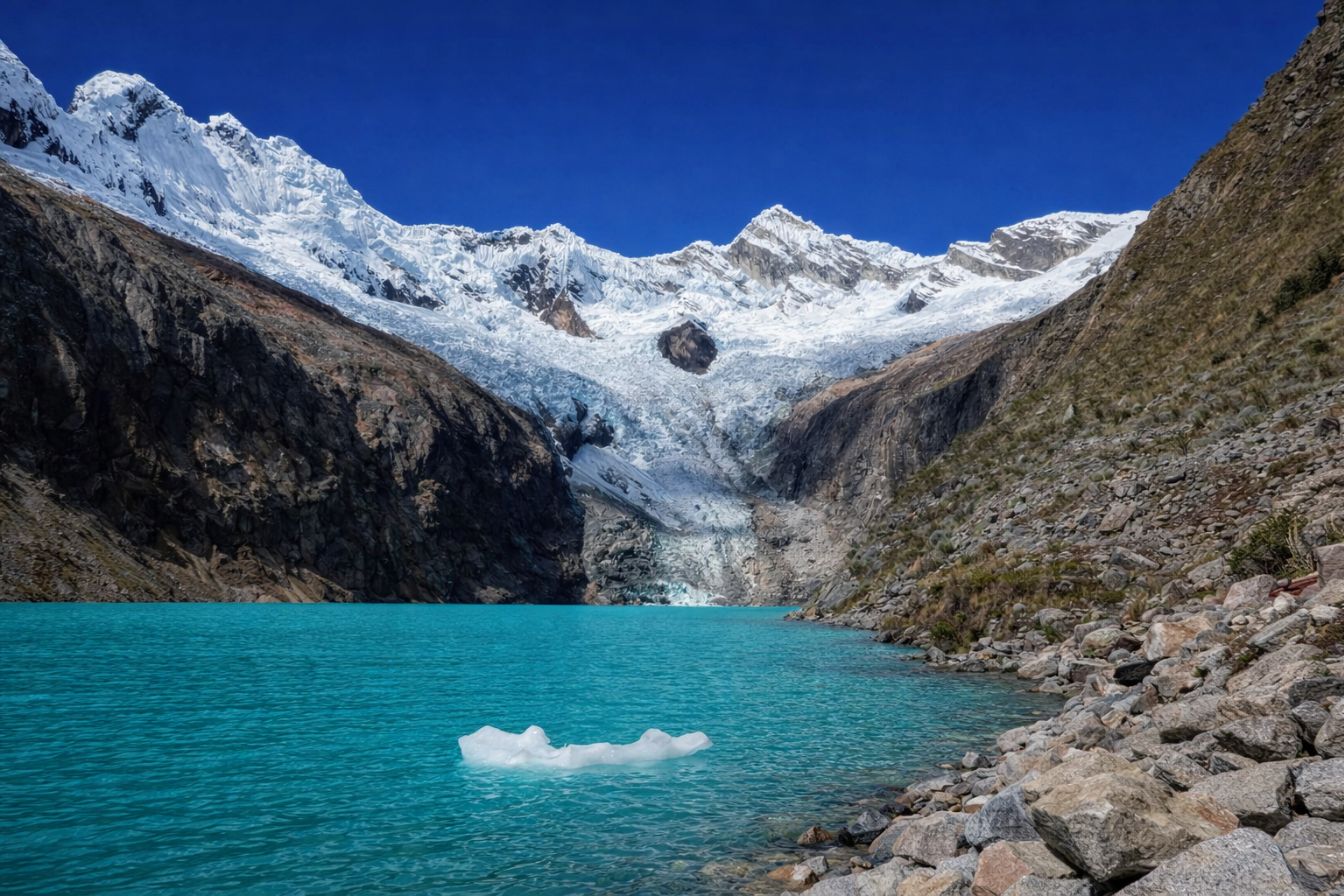
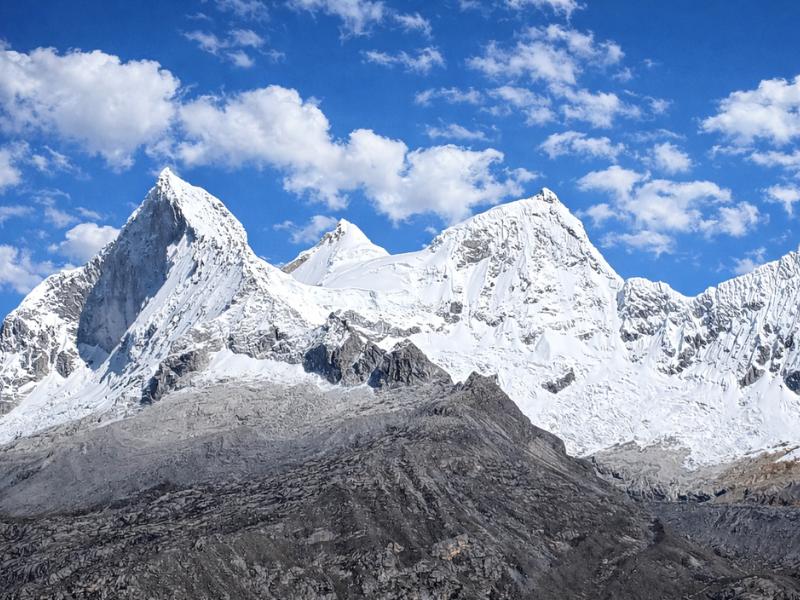
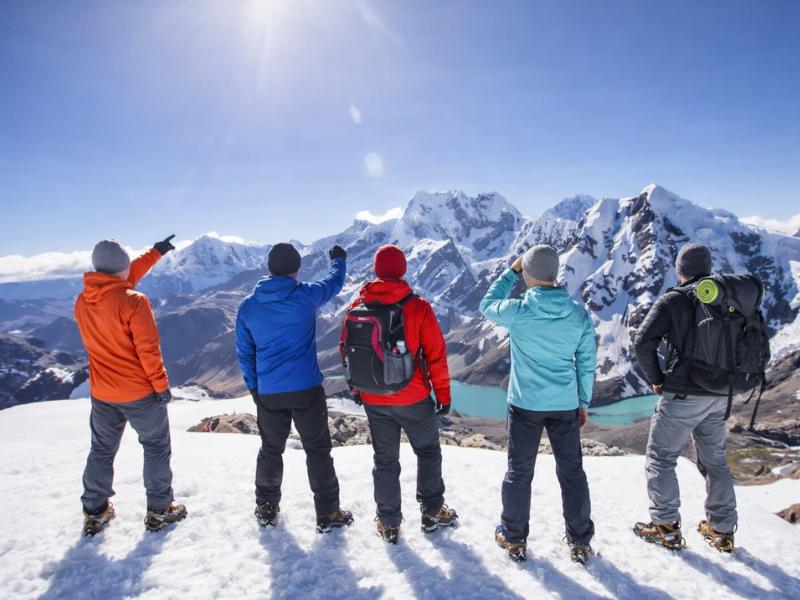
In the heart of Peru's Cordillera Blanca, the Santa Cruz Trek is one of the most stunning multi-day hikes in the Andes—glacier-capped peaks tower over turquoise lakes, wildflower meadows stretch across high passes, and icy rivers rush through narrow valleys with almost no crowds compared to the Inca Trail. Cross the 4,750 m Punta Unión pass for 360-degree views of snow-covered giants like Taulliraju and Quitaraju, camp beside milky Lagunas Ichicocha and Jatuncocha, and wake to condors soaring overhead. It's raw high-altitude beauty: crisp air, starry nights, and that satisfying exhaustion after a long day on the trail. With Santa Cruz Trekking Tours, you'll trek with experienced local guides who know every campsite and shortcut, get hearty Peruvian meals cooked fresh at camp, travel light with porches or mules carrying gear, and experience the Cordillera Blanca's magic in small groups—safe, scenic, and unforgettable from start to finish.
Our expert team has been helping navigate and book Santa Cruz Trekking tours and activities for tourists from the US and Canada for over a decade, ensuring you have a hassle-free trip with everything booked in advance.
With deep knowledge of the Cordillera Blanca, Peru’s stunning alpine landscapes, and high-altitude trekking routes, partnerships with the best local mountain guides and operators, and a passion for creating unforgettable experiences, we're committed to making your Santa Cruz Trek adventure truly extraordinary. From your first inquiry to your last trek, we're here to support you every step of the way.
Award-Winning Travel Experience
Santa Cruz Trekking Tours is recognized by leading travel platforms worldwide
Peru Santa Cruz Excellence Award2025
Cordillera Blanca Explorer Choice Award2024
Best Santa Cruz Trek Operator2023
Huascarán Region Sustainable Trekking Award2024
Andean Glaciers & Peaks Heritage Verified Excellence2024
Santa Cruz Trek travel questions
How do I get from Huaraz to the Santa Cruz Trek trailhead?
The Santa Cruz Trek trailhead is at Cashapampa (the most common starting point for the classic Santa Cruz Trek), located about 60–70 km northeast of Huaraz in the Cordillera Blanca. There is no direct public transport to Cashapampa, so the standard ways are:
1. Private transfer / taxi with driver (most common and recommended)
Cost: PEN 200–400 (~$50–100 USD) round-trip for the vehicle (4x4 or minivan, shared or private).
Time: ~2–2.5 hours each way on paved then dirt/gravel roads (Huaraz → Yungay → Cashapampa).
Pros: Direct door-to-trailhead service, driver waits or returns on your schedule (essential for multi-day treks), safe and comfortable.
Book through your hotel/hostel in Huaraz or local agencies — very reliable and the norm for trekkers.
2. Shared minivan or colectivo
Cost: PEN 30–60 (~$8–15 USD) per person one-way.
Time: ~2.5–3.5 hours (more stops, waits for full van).
How: Depart from Huaraz terminal or central points (e.g., near Plaza de Armas) to Yungay, then transfer to a local colectivo/taxi to Cashapampa (~30–45 min extra).
Pros: Cheaper.
Cons: Less comfortable, no fixed schedule, may need to wait or change vehicles.
3. Self-drive rental car
Cost: PEN 150–300/day rental + fuel.
Time: ~2–2.5 hours.
Pros: Full flexibility.
Cons: Road is winding/gravel near the end, parking at Cashapampa limited, not recommended unless experienced with mountain driving.
Verdict
Private transfer / taxi is the best and most reliable option — most trekkers use this to reach Cashapampa directly and safely. Arrange it through your hotel or tour operator in Huaraz — they often include it in trek packages. Leave early (5:00–7:00 AM) to arrive by 8:00–9:00 AM and start hiking with cooler weather and fewer people.
You can book highly rated Santa Cruz Trekking Tours from Huaraz (with transport to Cashapampa trailhead, expert guide, porters, camping, meals, and all logistics) at /.
Can I do the Santa Cruz Trek as a 3-day trip?
Yes, you can do the Santa Cruz Trek as a 3-day trip — it is a popular and realistic option offered by many Huaraz-based tour operators, including shortened or accelerated versions of the classic 4-day trek.
Here’s how a typical 3-day Santa Cruz Trek works in 2025–2026 (most common itinerary):
Day 1: Huaraz → Cashapampa trailhead → Llamacorral or Taullipampa camp
Early pickup from Huaraz (~5:00–6:00 AM).
Drive to Cashapampa trailhead (~2–2.5 hours).
Start hiking: ~8–10 km, 5–7 hours, moderate uphill with some steep sections.
Overnight at Llamacorral (~3,750 m) or push further to Taullipampa (~4,150 m) if fit/fast.
Day 2: Camp → Punta Unión Pass → Cachinapampa or Jancarurish camp
Early start to cross Punta Unión Pass (4,750 m) — the highest point, with stunning 360° views of snow-capped peaks (Alpamayo, Quitaraju, Taulliraju, Santa Cruz massif).
Descend to the other side (~8–12 km, 6–9 hours).
Overnight at Cachinapampa (~3,800 m) or Jancarurish (~3,900 m).
Day 3: Camp → Vaquería trailhead → return to Huaraz
Hike out to Vaquería (~6–10 km, 4–6 hours downhill).
Transport back to Huaraz (~3–4 hours by road).
Arrive Huaraz late afternoon/evening (~5:00–8:00 PM).
Pros of 3-day version:
Shorter commitment — good if you have limited time in Huaraz.
Covers the classic highlight: crossing Punta Unión Pass with epic views of the Santa Cruz range.
Still sees most of the best scenery (glaciers, lakes, alpine valleys).
Cons:
Faster pace — longer daily distances (especially Day 1–2), higher daily elevation gain/loss, less time to acclimatize or enjoy campsites.
More physically demanding — some operators call it “accelerated” or “express” — not ideal for beginners or those wanting a relaxed trek.
Less buffer for weather (rain/snow can slow progress) or altitude sickness.
Verdict
Yes, 3 days is enough for a rewarding Santa Cruz Trek experience — you get the pass, the views, and the Cordillera Blanca scenery.
4–5 days is still preferred for a more comfortable pace, better acclimatization, and time to enjoy the camps and side trails.
If you’re fit, acclimatized (2–3 nights in Huaraz), and want to save time, the 3-day version is a great choice.
You can book highly rated Santa Cruz Trekking Tours from Huaraz (3-day accelerated version, with transport to Cashapampa, expert guide, porters, camping, meals, and all logistics) at Santa Cruz Trekking Tours.
Is a guide required for the Santa Cruz Trek in Huascarán National Park?
No, a guide is not legally required for the Santa Cruz Trek in Huascarán National Park — you can hike it completely independently as long as you have the proper permits, equipment, and experience.
Current rules in Peru (2025–2026):
The Santa Cruz Trek is an open public trail — no mandatory guide regulation exists for this specific trek (unlike the Classic Inca Trail, which requires licensed guides and porters by law).
You need to pay the Huascarán National Park entrance fee (PEN 30–60 for foreigners, depending on duration) at the Cashapampa ranger station (trailhead) — cash only, no advance online booking needed for entry.
No camping permits or quotas — you can camp at designated sites (Llamacorral, Taullipampa, Cachinapampa, etc.) freely.
Why most people still hire a guide or go with a tour:
Safety — High altitude (Punta Unión pass at 4,750 m), unpredictable weather (sudden storms, snow even in dry season), remote sections with no phone signal, river crossings, and wildlife (bears, pumas — rare but present). Guides carry first-aid, satellite communication, and know safe routes.
Logistics — Transport to/from Cashapampa trailhead (~2–2.5 hours from Huaraz) is easier arranged through a tour. Porters carry heavy gear, cook meals, and set up camp — reduces your pack weight to ~5–8 kg.
Navigation & knowledge — Trails are mostly well-marked but have some confusing junctions — guides prevent getting lost, share history/geology, and point out wildlife.
Weather buffer — If storms close the pass, guides reroute or adjust safely.
Verdict
Independent is allowed and common among experienced, well-prepared trekkers — you save money (~50–70% less than guided) and have full flexibility.
Guided is strongly recommended for most people — especially first-timers, those with limited high-altitude experience, or anyone wanting safety, support, and local knowledge. The majority of trekkers (including many solo travelers) choose guided for peace of mind.
You can book highly rated guided Santa Cruz Trek tours from Huaraz (with transport to Cashapampa, expert guide, porters, camping, meals, and all logistics) at /.
How difficult is the Santa Cruz Trek overall?
The Santa Cruz Trek is considered a moderate to moderately difficult multi-day trek — it is one of the most popular and achievable alpine treks in the Cordillera Blanca (Huaraz, Peru), suitable for reasonably fit hikers with good acclimatization, but it is not an “easy” walk and requires solid preparation.
Here’s a realistic assessment in 2025–2026:
Overall difficulty rating: Moderate–hard (on a scale of easy/moderate/hard/extreme)
Distance: Classic route is 45–50 km (28–31 miles) round-trip (Cashapampa → Punta Unión → Vaquería).
Elevation gain/loss: Total ~2,000–2,500 m cumulative gain/loss over 4 days.
Highest point: Punta Unión Pass at 4,750 m (15,584 ft) — the main challenge, with steep ascent/descent on loose scree/gravel.
Daily breakdown (standard 4-day version):
Day 1: ~8–10 km, 5–7 hours, moderate uphill (gain ~800 m).
Day 2: ~10–12 km, 6–9 hours, steep climb to pass (gain ~1,000 m), long descent.
Day 3: ~10–12 km, 5–7 hours, rolling terrain with some ups/downs.
Day 4: ~8–10 km, 4–6 hours, mostly downhill to exit.
Terrain: Well-marked dirt trail with some rocky/scree sections, river crossings (usually easy), occasional mud after rain, and high-altitude exposure on the pass. No technical climbing or ropes needed.
Altitude: Starts at ~3,700 m (trailhead), peaks at 4,750 m — altitude sickness is the biggest risk for many (headache, fatigue, nausea). Proper acclimatization in Huaraz (2–3 nights at 3,050 m) is essential.
Weather: Can change rapidly — sunny mornings can turn to rain, wind, or snow even in dry season (May–Oct). Cold nights (0 to –10°C at high camps).
Who can do it comfortably:
Fit adults who are already acclimatized (2–3 nights in Huaraz).
People who regularly hike 10–20 km with 600–1,000 m elevation gain.
Guided tours make it easier — porters carry heavy gear (you carry only daypack ~5–8 kg), guides set pace, provide snacks/water, and handle navigation/weather.
Who should find it hard or reconsider:
Beginners with little multi-day hiking experience.
People not acclimatized (coming straight from sea level).
Those with knee/back issues (downhill on Day 2 is steep on loose gravel).
Very young children or elderly without strong fitness.
Verdict The Santa Cruz Trek is moderate to moderately difficult — challenging due to altitude, the Punta Unión pass, and long days, but very achievable for fit, prepared hikers with a guide and porters. It is widely regarded as one of the most beautiful and rewarding treks in the Cordillera Blanca, with spectacular views of Alpamayo, Taulliraju, and other snow-capped peaks — most people who do it say it was tough but absolutely worth the effort.
You can book highly rated guided Santa Cruz Trek tours from Huaraz (with transport to Cashapampa, expert guide, porters, camping, meals, and all logistics) at Santa Cruz Trekking Tours.
What is the highest point on the Santa Cruz Trek?
The highest point on the Santa Cruz Trek is Punta Unión Pass at 4,750 meters (15,584 feet) above sea level.
This mountain pass is the centerpiece of the trek and is crossed on Day 2 of the standard 4-day itinerary (or Day 2 of the 3-day accelerated version). It offers stunning 360° panoramic views of the Santa Cruz massif, including iconic snow-capped peaks such as:
Alpamayo (one of the most beautiful mountains in the world)
Quitaraju
Taulliraju
Santa Cruz Norte & Sur
The climb to Punta Unión is the most challenging section — steep, loose scree/gravel, high altitude exposure, and significant elevation gain (~1,000 m from the previous camp). The descent on the other side is long and steep, leading to the next camp (Cachinapampa or Jancarurish).
Most guided tours from Huaraz emphasize this pass as the highlight — the views are breathtaking on clear days, and it’s often the moment trekkers feel the full reward of the trek.
Best time of year for Santa Cruz Trek to have clear weather?
The best time of year for the Santa Cruz Trek to have clear weather is during the dry season: May to October, with June to August being the absolute peak period for the clearest skies, most reliable visibility, and the least chance of rain or snow on the trail.
Here’s the realistic breakdown for 2025–2026:
Dry season (May–October)
Weather: Mostly sunny and dry, daytime temperatures 10–20°C (50–68°F) at lower camps, cooler at high altitude (Punta Unión pass 4,750 m can be 0–10°C). Nights cold (0 to –10°C at camps), but very low rainfall — trails are dry, clear views of the Santa Cruz massif (Alpamayo, Taulliraju, Quitaraju), and excellent photography conditions.
Visibility: Highest chance of clear panoramas from Punta Unión Pass and other viewpoints — no clouds or mist obscuring the peaks.
Crowds: Moderate to high — busiest in July–August (international summer holidays + Peruvian school break), but the trail is not overcrowded like the Inca Trail.
Best months: June–August — driest, clearest skies, longest daylight (~12 hours), most stable weather for crossing the pass safely.
Wet season (November–April)
Weather: Frequent afternoon rain/showers (especially Dec–Mar), higher humidity, muddier trails, risk of snow/ice on the pass (especially Nov and Apr). Daytime 8–18°C, nights colder and wetter.
Visibility: Often reduced — clouds, mist, or rain can hide the peaks from Punta Unión, making the main reward (panoramic views) less reliable.
Crowds: Very low — much quieter trails, easier bookings, lower prices.
Downside: Higher chance of trail conditions (mud, slippery scree on descent), and weather can force turnaround at the pass.
Verdict Choose the dry season (especially June–August) for the clearest weather, best visibility of the Cordillera Blanca peaks, driest trails, and the highest chance of completing the trek with uninterrupted views from Punta Unión Pass. This is when most trekkers go and when the Santa Cruz Trek is at its most photogenic and reliable.
What should I pack for Santa Cruz Trekking Tours?
For guided Santa Cruz Trekking Tours from Huaraz (typically 3–5 days, high altitude, cold nights, variable weather), pack lightweight layers, warm sleeping gear, and rain/sun/insect protection. The trek reaches 4,750 m at Punta Unión Pass — nights are cold (0 to –10 °C at camps), days can be sunny/hot (10–25 °C) or rainy/windy.
Core packing list (essential for all trekkers)
Clothing – layering system
Moisture-wicking base layers (2–3 long-sleeve merino or synthetic tops + leggings)
Mid-layers (1–2 fleece jackets or light puffy)
Waterproof/windproof shell jacket + rain pants (essential — rain/snow possible even in dry season)
Long hiking pants (quick-dry, convertible if preferred)
Camp/sleep clothes (light thermal set for inside sleeping bag)
Footwear
Broken-in waterproof hiking boots with good ankle support and grip (Vibram sole recommended)
Lightweight camp sandals or shoes (for stream crossings or evenings)
Gaiters (optional but useful for scree, mud, or snow on pass)
Sleeping gear
Sleeping bag rated to –10 °C / 14 °F comfort (most tours provide, but bring your own liner if you get cold easily)
Sleeping bag liner (adds warmth, keeps bag clean)
Sun & altitude protection
High-SPF sunscreen (50+, reapply every 2 hours — UV very strong at altitude)
Lip balm with SPF
Polarized sunglasses (glare off snow/glaciers)
Wide-brim hat or cap (secure with chin strap for wind)
Headlamp + extra batteries (early starts, dark mornings/camps)
Hydration & nutrition
Reusable water bottle or hydration bladder (2–3 L capacity — tours provide boiled/filtered water)
Water purification tablets/drops (backup)
High-energy snacks (nuts, energy bars, dried fruit, chocolate — lunch/dinner provided, but extras for altitude hunger)
Health & safety
Personal medications + small first-aid kit (blister plasters, ibuprofen, Imodium, Diamox/acetazolamide if prescribed for altitude)
Insect repellent (sandflies/mosquitoes at lower camps)
Toilet paper + small trowel (for remote camps)
Hand sanitizer & wet wipes
Small towel (quick-dry microfiber)
Other essentials
Small daypack (20–30 L) — you carry this daily (water, snacks, layers, camera)
Power bank (limited charging at camps)
Camera/phone + waterproof case + extra batteries/memory cards
Cash in small PEN bills (50–100 notes) — tips for porters/guides (~PEN 100–200 total per trek)
Passport copy (leave original in Huaraz hotel safe)
Seasonal notes
Dry season (May–Oct): Extra warm layers (down puffy, fleece), warm hat/gloves for pass and nights.
Wet season (Nov–Apr): Extra rain poncho, quick-dry everything, more insect repellent.
Pack in a soft duffel bag (porters carry the main bag — max ~12–15 kg) + small daypack for daily use. Tours usually provide tent, sleeping pad, meals, and cooking — you only need personal gear.
Are kids allowed on Santa Cruz Trek multi-day routes?
Yes, children are allowed on the Santa Cruz Trek multi-day routes, but there are practical age and fitness restrictions set by most Huaraz-based tour operators in 2025–2026.
Typical minimum age guidelines (varies slightly by company):
Children 10–12 years and older — generally accepted on the standard 4-day or 3-day accelerated Santa Cruz Trek, provided they are physically fit, have good endurance, and are already acclimatized (2–3 nights in Huaraz at 3,050 m).
Children 8–10 years — sometimes allowed on private/family tours with special arrangements (extra porter to carry child if needed, slower pace, shorter daily distances), but many operators set 10–12 as the minimum for safety due to:
High altitude (Punta Unión pass at 4,750 m) — kids acclimatize slower and are more prone to altitude sickness.
Long daily distances (10–15 km/day) and significant elevation gain/loss (~2,000–2,500 m total).
Steep, loose scree/gravel sections (especially descent from pass) — risk of slips or fatigue.
Cold nights (0 to –10 °C at camps) and variable weather.
Children under 8 years:
Rarely accepted on the full Santa Cruz Trek — most operators do not allow it due to the physical demands, altitude risks, and inability to carry heavy loads or keep up on long days.
Some companies offer customized shorter versions or alternative family-friendly day hikes (e.g., Laguna 69 or Churup Lake) instead.
Family-friendly notes:
Private or custom tours are much more flexible — operators can shorten daily distances, add rest days, provide extra porters, and choose easier camps for families with older kids (10+).
Child rates: Usually 50–70% off for ages 10–12; under 10 may not be accepted or charged full rate with extra support.
Safety: All reputable tours have experienced guides, porters, first-aid, and emergency protocols — kids must be fit, acclimatized, and supervised closely.
Verdict
Kids 10–12 years and older who are active hikers and well-acclimatized can do the Santa Cruz Trek with a guide — many families successfully complete it.
Younger children (under 8–10) are generally not recommended for the full multi-day route — opt for easier day hikes instead (Laguna 69, Pastoruri, Churup Lake).
You can book highly rated family-friendly Santa Cruz Trekking Tours from Huaraz (with transport to Cashapampa, expert guide, porters, camping, meals, and child accommodations where possible) at /. Always confirm the operator’s specific age/fitness policy when booking.
Is camping equipment included in Santa Cruz Trekking Tours?
Yes, camping equipment is included in most Santa Cruz Trekking Tours from Huaraz — it is standard on all guided multi-day packages (3-day, 4-day, or longer versions).
What is typically provided:
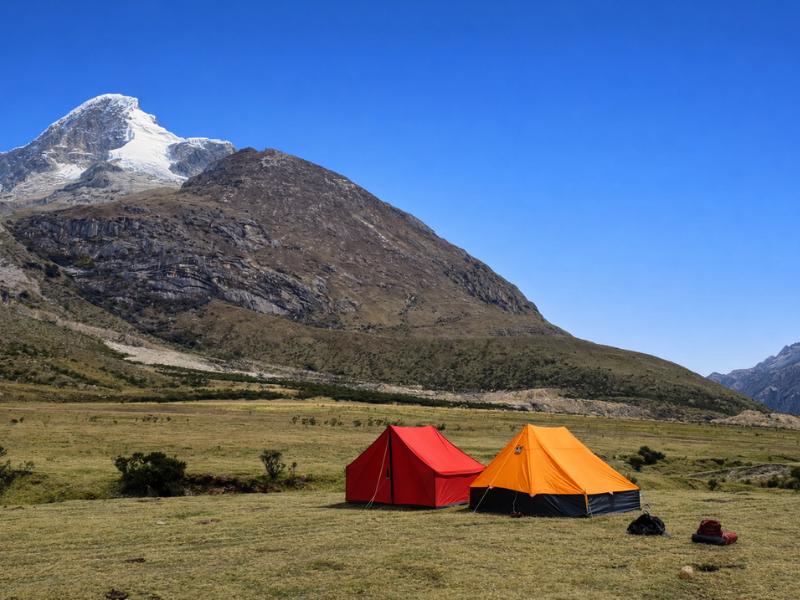
High-quality 4-season tents (double or triple capacity, shared by 2–3 people).
Sleeping pads/mats (inflatable or foam — good insulation for cold nights).
Sleeping bags (rated to –10 °C or better comfort, often with liners).
Cooking equipment (stoves, pots, utensils — porters/guides handle all setup/cooking).
Dining tent (for meals in rain or wind) + mess tent furniture (tables/chairs on some tours).
Toilet tent (basic field toilet for privacy).
You only need to bring your personal sleeping bag liner (optional for extra warmth/cleanliness), personal clothing, toiletries, and a small daypack — porters carry the main duffel (weight limit ~12–15 kg per person).
Verdict Camping equipment is fully included on guided Santa Cruz Trek tours — you don’t need to bring tents, pads, bags, or cooking gear. This is one of the reasons guided tours are popular: everything logistical is handled, so you focus on hiking and the scenery.
You can book highly rated Santa Cruz Trekking Tours from Huaraz (with camping equipment, porters, meals, expert guide, transport to Cashapampa, and all logistics) at Santa Cruz Trekking Tours. Always confirm the exact inclusions with your chosen operator when booking.
Are meals included on Santa Cruz Trek guided tours?
Yes, meals are included on guided Santa Cruz Trek tours from Huaraz — it is standard practice for reputable operators to provide all meals during the trek (breakfast, lunch, dinner, and snacks) as part of the package.
Here’s what’s typically included in 2025–2026:
Breakfast — at camp each morning (oatmeal, pancakes, eggs, bread, jam, coffee/tea, hot chocolate, fruit).
Lunch — hot cooked meal at camp or picnic-style on the trail (pasta, rice, quinoa, chicken/vegetable stew, salads, soup, fresh fruit, juice).
Dinner — hearty hot meal at camp (soup, main course like stir-fry, grilled meat/veggies, rice/potatoes, dessert like flan or fruit).
Snacks — trail mix, energy bars, coca tea, and hot drinks during breaks.
Vegetarian/vegan options — available on request (most operators accommodate with advance notice — beans, quinoa, veggies, eggs, cheese, pasta).
Drinking water — boiled/filtered water provided at camp (bring your own bottle; no need to buy bottled water).
What is usually NOT included:
Personal snacks (energy bars, chocolate — bring extras if you have specific preferences).
Alcoholic drinks or specialty items.
Meals in Huaraz before/after the trek.
Verdict All meals are fully included on guided Santa Cruz Trek tours (3-day, 4-day, or longer) — you don’t need to carry or cook food. This is one of the big advantages of guided tours: porters/guides prepare everything, so you focus on hiking and enjoying the scenery.
You can book highly rated guided Santa Cruz Trek tours from Huaraz (with all meals included, transport to Cashapampa, expert guide, porters, camping equipment, and all logistics) at /. Always confirm dietary needs (vegetarian/vegan) when booking.
Is Santa Cruz Trek safe for solo hikers on guided tours?
Yes, the Santa Cruz Trek is very safe for solo hikers when done on guided tours — it is one of the safest multi-day treks in the Cordillera Blanca (Huaraz, Peru) for independent visitors, including solo women, with extremely low crime risk and strong professional safety standards in 2025–2026.
Key safety points for solo hikers on guided Santa Cruz Trek tours:
Low crime — Violent crime or theft targeting solo trekkers is almost nonexistent on the trail. The route is remote with no permanent local population in the core trekking area — only other trekkers, porters, and guides. Petty theft (unattended bags at camps) is the only minor concern — keep valuables in your daypack or tent.
Guided tour advantages — You are never alone — small-group tours (4–12 people) or private tours create a built-in social safety net. Guides are highly experienced (many with 10–20+ years), carry first-aid, satellite phones or radios for emergencies, know the trail intimately, and monitor weather/altitude.
Professional setup — Reputable Huaraz operators provide:
Porters to carry main gear (you only carry a light daypack ~5–8 kg).
All camping equipment, meals, and water (boiled/filtered).
Armed guides on walking sections if needed (though rare on Santa Cruz).
Emergency evacuation plans (helicopter access in serious cases).
Solo female feedback — Solo women frequently complete the Santa Cruz Trek on guided tours and report feeling completely safe and supported — guides are professional/respectful, group dynamics are friendly, and the trail feels secure day and night.
Main risks (low overall on guided tours):
Altitude sickness (Punta Unión pass 4,750 m) — guides monitor symptoms, carry oxygen, and can descend quickly if needed.
Weather — sudden rain/snow or wind on the pass — guides check forecasts and reroute or turn back if unsafe.
Trail conditions — loose scree on descent — guides set safe pace and help with footing.
Practical tips for solo hikers on guided tours:
Book with reputable Huaraz operators (high ratings, clear safety info) — they prioritize group cohesion and emergency readiness.
Choose small-group or private tours — more personal attention and flexibility.
Share tour details (operator, guide name, dates) with someone.
Carry a phone/power bank (signal is spotty but works in some areas; satellite messengers are ideal).
Dress for weather — layers, rain gear, warm hat/gloves for the pass and cold nights.
Overall verdict: The Santa Cruz Trek on guided tours is very safe for solo hikers — the professional guides, small-group setting, remote but patrolled trail, and low-risk nature of the route make it one of the easiest and most secure multi-day treks in Peru for solo travelers. Many solo women and first-timers say it was one of their safest and best trekking experiences.
You can book highly rated guided Santa Cruz Trek tours from Huaraz (small-group or private, with expert guide, porters, camping, meals, transport to Cashapampa, and strong safety focus) at Santa Cruz Trekking Tours.
Is 4 days enough for Santa Cruz Trek or go shorter/longer?
4 days (3 nights) is the classic and most recommended duration for the Santa Cruz Trek — it is the standard itinerary offered by nearly all reputable Huaraz-based tour operators and gives you the full, balanced experience without feeling rushed or overly strenuous.
Here’s the typical 4-day Santa Cruz Trek itinerary and why it works best in 2025–2026:
Day 1: Huaraz → Cashapampa trailhead → Llamacorral camp
Early pickup from Huaraz (~5:00–6:00 AM).
Drive to Cashapampa (~2–2.5 hours).
Start hiking: ~8–10 km, 5–7 hours, moderate uphill with some steep sections.
Overnight at Llamacorral (~3,750 m) or Taullipampa (~4,150 m if you push further).
Day 2: Camp → Punta Unión Pass → Cachinapampa or Jancarurish camp
Early start to cross Punta Unión Pass (4,750 m) — the highest point, with stunning 360° views of the Santa Cruz massif (Alpamayo, Quitaraju, Taulliraju, Santa Cruz Norte & Sur).
Descend to the other side (~8–12 km, 6–9 hours).
Overnight at Cachinapampa (~3,800 m) or Jancarurish (~3,900 m).
Day 3: Camp → Vaquería trailhead → Huaraz
Hike out to Vaquería (~6–10 km, 4–6 hours downhill).
Transport back to Huaraz (~3–4 hours by road).
Arrive Huaraz late afternoon/evening (~5:00–8:00 PM).
Why 4 days is considered ideal:
Covers the entire classic route — from Cashapampa to Vaquería, crossing Punta Unión Pass, with views of the most beautiful peaks in the Cordillera Blanca.
Balanced daily distances (8–12 km/day) and elevation gain/loss (~2,000–2,500 m total) — challenging but achievable for fit hikers with good acclimatization (2–3 nights in Huaraz).
Enough time to enjoy campsites, rest, take photos, and appreciate the scenery without extreme fatigue.
Weather buffer — if rain/snow hits the pass, you have a day to adjust or wait it out.
Shorter (3 days / 2 nights):
Possible (accelerated version) — longer daily distances (10–15 km/day), steeper pace, less rest time.
Good for very fit, acclimatized hikers who want to save time/money, but many find it rushed and more tiring.
Longer (5–6 days / 4–5 nights):
Adds rest days, side hikes (e.g., to Ichicocha or Jancarurish lakes), slower pace, and more time for photography/wildlife.
Better for acclimatization, families, or anyone wanting a relaxed trek.
Verdict4 days is the sweet spot — long enough to fully experience the Santa Cruz Trek’s highlights (Punta Unión Pass views, alpine lakes, glaciers) without being too short (3 days) or unnecessarily extended (5+ days). It is the most common and recommended duration for the majority of trekkers.
You can book highly rated guided Santa Cruz Trek tours from Huaraz (4-day classic version, with transport to Cashapampa, expert guide, porters, camping, meals, and all logistics) at /.
Should I acclimatize in Huaraz before Santa Cruz Trek?
Huaraz sits at ~3,050 m (10,000 ft), while the Santa Cruz Trek reaches its highest point at Punta Unión Pass (4,750 m / 15,584 ft). Proper acclimatization significantly reduces the risk and severity of acute mountain sickness (AMS), which can include headache, nausea, dizziness, fatigue, and in severe cases, life-threatening conditions like HAPE or HACE.
Recommended acclimatization time in Huaraz:
Minimum: 2 full days / 3 nights (Arrive Day 1 → rest Day 2 → light activity Day 3 → start trek Day 4 morning). This is the absolute bare minimum for most fit adults with no prior altitude issues.
Ideal / most recommended: 3 full days / 4 nights (Arrive Day 1 → rest Day 2 → easy day hikes Day 3 & 4 → start trek Day 5). This is what the majority of reputable Huaraz tour operators and doctors recommend — it gives your body time to adjust and makes the trek much more enjoyable.
More conservative: 4+ days / 5+ nights Especially if you are over 50, have a history of altitude sickness, are coming directly from sea level (Lima ~150 m), or plan high-altitude add-ons (e.g., Laguna 69 or Ausangate).
Why acclimatization is important
Altitude sickness symptoms usually start within 6–24 hours of arrival and peak on Days 1–2.
Acclimatizing in Huaraz (lower than the trek’s high point) prepares your body for the pass and high camps.
Guided tours from Huaraz typically assume you’ve spent 2–3 nights acclimatizing — they start very early on the trek day and monitor symptoms during the hike.
Practical tips during acclimatization in Huaraz
Rest on arrival day — avoid alcohol, caffeine, and heavy meals.
Drink plenty of water (3–4 L/day) and coca tea (traditional and effective for mild symptoms).
Take short, gentle walks (Plaza de Armas, local markets) on Days 2–3 — helps adjustment without overexertion.
Consider acetazolamide (Diamox) if prone to AMS — consult a doctor before travel.
Eat light, high-carb meals and sleep well.
VerdictSpend at least 2 full days / 3 nights in Huaraz before starting the Santa Cruz Trek — it’s the safest and most comfortable approach. 3 full days / 4 nights is ideal for most people to minimize symptoms and enjoy the trek fully.
You can book highly rated guided Santa Cruz Trek tours from Huaraz (with acclimatization advice, transport to Cashapampa, expert guide, porters, camping, meals, and all logistics) at Santa Cruz Trekking Tours.
A Typical Trek Day on the Santa Cruz
One full day in the park, hour by hour, the way the guided tours actually run it.
5:30 amWake-up call at Taullipampa camp, coca tea served
6:30 amBreakfast, pack down tents, mules loaded
7:15 amTrek begins toward Punta Unión Pass
8:30 amLake Jatuncocha, turquoise water and glacier reflection
4:00 pmArrive at camp, tents already set up by support team
7:00 pmDinner, guide debrief for Day 3
The Santa Cruz Trek runs through Huascarán National Park in the Cordillera Blanca, Peru’s high tropical mountain range and home to the highest concentration of glaciated peaks in the tropics. The circuit covers roughly 50 kilometers over four days, beginning at the Cashapampa trailhead and ending at Vaquería, passing through valleys that receive fewer visitors than the Inca Trail while delivering mountain scenery that experienced alpinists describe as among the finest in the Andes. The trek is not technical but it is genuinely high-altitude, the Punta Unión Pass at 4,750 meters being the highest point of the crossing, and Santa Cruz Trekking Tours handles acclimatization planning with the same seriousness they give to equipment and logistics. Clients who arrive in Huaraz from sea level and attempt the pass the following day without any acclimatization tend to have a poor experience at altitude. The guides insist on at least two nights in Huaraz before the trek begins.
Day 2 of the four-day itinerary is the day the trek is remembered by. The camp at Taullipampa, at approximately 4,200 meters in a wide open valley with the peaks of Alpamayo and Santa Cruz visible above the moraines, is cold by 5am and the guides have coca tea ready before the sleeping bags are packed. The walk from camp to the pass takes about three and a half hours, gaining 550 meters of elevation over trail that begins as a gradual ascent through alpine meadow and steepens progressively through boulder field and scree toward the final zig-zag to the saddle. The guides set a pace that matches the slowest person in the group, and the altitude protocol is consistent: walk slowly, breathe deeply, communicate any symptoms without waiting to see if they resolve. The support mules carry all the heavy gear, which means clients carry only a daypack, and this makes the altitude significantly more manageable than it would be with a full load.
Here is what we tell clients honestly before Day 2: the Punta Unión Pass will likely be the highest point you have ever stood in your life, and altitude affects people without predictability regardless of fitness. A client who runs marathons can feel altitude sickness more acutely than someone who rarely exercises, because the physiological response has very little to do with cardiovascular fitness. The guides carry supplemental oxygen, diamox, and the knowledge of when to turn a client around rather than push to the summit. In a decade of running this route, Santa Cruz Trekking Tours has never had a client push through a dangerous altitude response because we make the decision to descend before it becomes one. Clients who communicate their symptoms honestly and trust the guide’s assessment consistently have a better summit experience than those who push silently.
The view from Punta Unión is the view that most clients photograph and show to people for the rest of their lives. The pass is a narrow saddle and looking east the Cordillera Blanca ridge reveals Taulliraju, Quitaraju, and the Santa Cruz massif in a panorama of ice and rock that the preceding three hours of upward effort makes impossible to take for granted. The mules are already on the far side of the pass before the clients arrive, and the guides give thirty to forty minutes at the top before the cold and the thin air make staying counterproductive. The descent toward the Santa Cruz valley is steep initially and then eases into the wide green meadows of Cachinapampa, where the support team has lunch ready and the altitude drops enough that appetites return.
The afternoon walk to camp is the gentle close that a hard morning earns. The valley below the pass runs for several kilometers between steep lateral moraines, the trail following a glacial river through terrain where vicuñas graze and Andean condors circle the thermals above the ice. The guides identify birds, explain the glacial geomorphology, and answer the questions that clients have been accumulating since the morning. By the time camp appears around a bend in the valley and the cook has dinner starting, most clients have the specific mountain exhaustion that produces immediate, deep sleep and the clear-headed satisfaction that comes from having been somewhere genuinely difficult and made it through.
Average Tour Prices for the Santa Cruz Trek, Peru
Tap a column heading to sort.
Prices below are what you’ll pay when booking through verified operators online. They are current as of early 2026. The Santa Cruz Trek is a 45 to 50 km circuit in the Cordillera Blanca of Peru’s Ancash Region, widely regarded as one of the finest multi-day mountain treks in South America. The route runs through Huascarán National Park, a UNESCO World Heritage Site, and crosses the Punta Unión pass at 4,750 metres with 360-degree views of snow-capped peaks including Alpamayo, Quitaraju, Taulliraju, and Artesonraju (the inspiration for the Paramount Pictures mountain logo). The main trailheads are Cashapampa (southern) and Vaquería (northern), with most guided tours starting from Cashapampa and ending at Vaquería, or the reverse. Huaraz is the base city, approximately 2 to 2.5 hours by road from the Cashapampa trailhead. Huaraz has a domestic airport (ATA) with LATAM connections to Lima; most visitors also reach Huaraz by overnight bus from Lima (approximately 8 hours). The trekking season runs May to September; trails are generally muddy or snowed out from December to March.
Santa Cruz Trekking Tours: What Each Experience Costs Online
All tours are fully all-inclusive of transport from Huaraz to the trailhead, professional certified guide, cook, porters or pack mules for luggage, camping equipment (tents, sleeping bags, mats), all meals from Day 1 to Day 4, and Huascarán National Park entry fees. The standard 4-day small-group option runs the classic Cashapampa to Vaquería route crossing Punta Unión pass. The private Llanganuco version ($1,060 per group, typically for 2 to 4 people) includes additional acclimatisation time at Llanganuco lakes and a more flexible daily pace; per-person cost for 2 to 4 people is $265 to $530. The 20-day expedition combines the Santa Cruz Trek with technical mountaineering ascents of Alpamayo and Chopicalqui; it requires previous high-altitude trekking experience, is conducted with ISO 9001-certified safety protocols and high-mountain rescue support from Socorro Andino Peruano, and includes Starlink satellite connectivity throughout.
Online vs. Book Locally in Huaraz vs. International Trekking Agency: How Booking Method Affects What You Get
Book Online in Advance (via verified operators like Santa Cruz Trekking Tours)
$390 for the standard 4-day group trek; $1,060 for private; $3,970 for the 20-day expedition
Low: certified guide, cook, and porter team confirmed, camping equipment quality managed, national park permits arranged, transport from Huaraz coordinated; the small-group 4-day trek departures fill from June through August when the Cordillera Blanca trekking season peaks; the 20-day expedition requires booking months ahead due to the limited permit system for technical summit routes on Alpamayo; free cancellation available 24 to 48 hours ahead for standard treks
Book Locally in Huaraz on Arrival (approach agencies in Huaraz, 1 to 2 days before the trek)
Comparable to online for the standard 4-day group option; slightly lower in shoulder season
Medium in peak season, Low in shoulder season: Huaraz’s main street is lined with trekking agencies offering Santa Cruz packages, and the standard 4-day option is consistently available with comparable equipment and guide quality to online booking; the specific risk is that peak season departures (July and August) fill in advance, and arriving without a booking can mean delays of 1 to 2 days waiting for a departure slot; the private option and 20-day expedition are both better managed with advance coordination
International Trekking Agency (book as part of a Peru trekking package from a specialist adventure operator)
Typically 40 to 80% above direct operator rates
Low: agencies like G Adventures, Intrepid, and World Expeditions run Santa Cruz packages that bundle the Lima to Huaraz transport, acclimatisation days in Huaraz, the trek itself, and often additional Cordillera Blanca day hikes; the convenience is genuine for first-time Peru trekkers who want everything managed; the underlying guide and cook crew are typically local Huaraz operators, making the core experience the same
The Honest Case for Booking with Santa Cruz Trekking Tours in Advance
The Santa Cruz Trek occupies a specific position in world trekking: it is technically non-technical (no ropes, no crampons, no mountaineering experience required), fully covered by a 4-day itinerary, and consistently rated among the top ten multi-day treks globally by serious trekking publications. The comparison point is the Inca Trail, which requires a permit booked months ahead and costs considerably more; the Santa Cruz has no permit cap (Huascarán National Park has a daily entry fee of approximately S/65, roughly $18 USD, paid at the gate), runs through scenery that many experienced trekkers consider equal to or better than the Inca Trail, and receives a fraction of the traffic. On any given day in July on the Santa Cruz circuit, you might share campsites with 20 to 50 other trekkers; the Inca Trail in the same month is capped at 500 permits daily.
The $390 standard 4-day group option is the appropriate starting point for the large majority of visitors. The all-inclusive format, covering transport from Huaraz, the certified guide, a dedicated cook producing hot meals at each camp, porters or mules carrying all the heavy camping equipment, and national park fees, removes the considerable logistical complexity of running a multi-day wilderness trek independently at altitude. The specific physical demands are moderate to challenging: the route involves approximately 8 to 12 km of hiking per day, with the Punta Unión pass crossing on Day 2 representing the most strenuous section. The crossing itself, a narrow rocky saddle at 4,750 metres with views dropping away on both sides, is by general consensus the most visually dramatic moment on the trek and worth every metre of altitude gain on the ascent.
The 20-day technical expedition at $3,970 is a different category entirely and deserves clear framing. Alpamayo, at 5,957 metres, was once voted the world’s most beautiful mountain by an international survey of alpinists, a title it retains in most serious mountaineering assessments. Its southwest face, a near-perfect pyramid of ice and snow, is one of the iconic images in Andean mountaineering. The expedition pairs the Santa Cruz approach trek with acclimatisation days on training peaks before the summit attempts on both Alpamayo and the neighbouring Chopicalqui (6,354 metres). It is appropriate for trekkers with previous experience above 5,000 metres and some basic ice and crampon skills, but does not require full technical mountaineering background; the certified guides manage the technical sections. The inclusion of Starlink satellite internet and certified high-altitude rescue support reflects the seriousness with which the operator manages safety at these altitudes.
How to Visit the Santa Cruz Trek
The Santa Cruz Trek runs through the heart of Peru’s Cordillera Blanca, crossing the Punta Unión pass at 4,750 metres and threading through a valley where the snow-covered flanks of Alpamayo, Taulliraju, and Quitaraju are almost continuously visible. It is routinely described as one of the most beautiful multi-day hikes in the world, and the description holds up: the combination of turquoise glacial lakes, high-altitude meadows, Andean condors overhead, and ice-capped peaks that dwarf everything below them is genuinely extraordinary at every camp. It is also considerably less crowded than the Inca Trail, does not require a permit purchased months in advance, and rewards effort with views that are as good as anything in the South American Andes. Here is what the team at Santa Cruz Trekking Tours tells first-timers when they plan their visit.
1
Fly into Lima and connect to Huaraz by overnight bus or private transfer.
Huaraz is the base town for the Cordillera Blanca and sits at 3,050 metres in the Callejón de Huaylas valley about 400 kilometres north of Lima. Direct flights to Huaraz are limited; most trekkers take the overnight bus from Lima’s Cruz del Sur or Movil Bus terminal, which takes around seven to eight hours and arrives in the early morning. Some operators offer private transfer by vehicle, which is faster but more expensive. Huaraz has a good concentration of trekking agencies, gear rental shops, and restaurants oriented toward the hiking market, and spending a day or two exploring the town before the trek begins is time well spent.
2
Acclimatise in Huaraz for at least two full days before starting the trek.
The Punta Unión pass reaches 4,750 metres, and altitude sickness at that elevation is genuinely debilitating for people who have not spent time adjusting. Huaraz itself sits at 3,050 metres, which is high enough to start the adaptation process without being dangerous. Two nights of rest, light walking, coca tea, and avoiding alcohol gives the body enough time to begin adjusting before the first day of hiking. Three nights is better. The most common mistake on the Santa Cruz Trek is starting the morning after arriving in Huaraz, which produces a first day of hiking with a persistent headache and the energy levels of someone recovering from an illness. The acclimatisation days are not wasted time; they are what makes the pass feel like an achievement rather than an ordeal.
The trek traditionally starts at the Cashapampa trailhead, reached by a two to two-and-a-half hour drive from Huaraz through Yungay. Day one climbs through the valley to the first camp at Llamacorral around 3,750 metres. Day two is the main event: the ascent to Punta Unión and the descent to the second camp on the far side. Day three continues through the valley with the peaks remaining visible throughout. Day four exits at Vaquería with transport back to Huaraz. A three-day accelerated version is possible for very fit and well-acclimatised trekkers, but it requires longer daily distances and leaves less time at the best camps.
4
June through August is the best window for the clearest conditions.
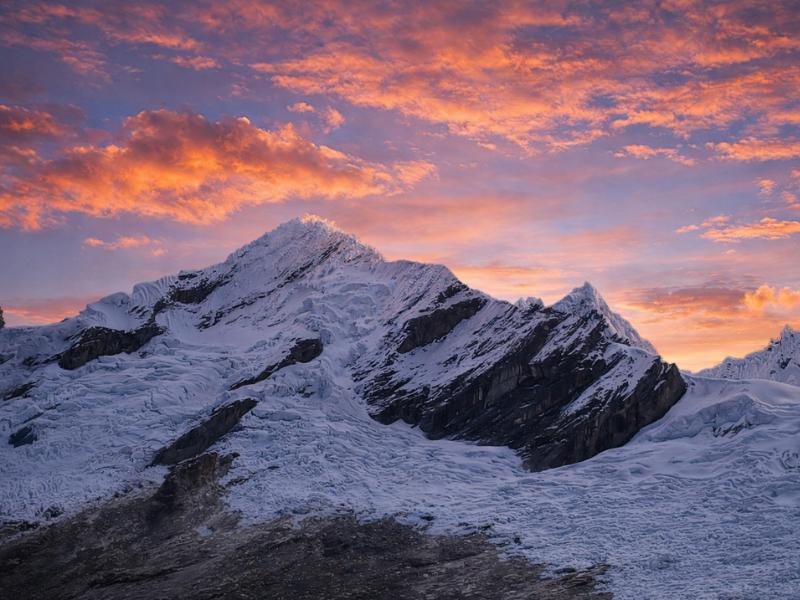
The Cordillera Blanca‘s dry season runs from May through October, but June, July, and August provide the most reliable clear skies, the driest trails, and the highest probability of unobstructed views from the Punta Unión pass. The mornings are almost invariably clear; afternoon clouds build and occasionally produce brief rain or snow near the pass, which is why guided groups tend to cross early. The views at sunrise from camp, with the glacier-covered peaks catching the first light, are the kind of photography that requires no skill beyond being in the right place.
5
Go with a guided tour that includes porters.
The Santa Cruz Trek does not legally require a guide the way the Classic Inca Trail does, but the combination of high altitude, variable weather, river crossings, and remote terrain makes experienced local guidance strongly advisable for anyone without specific Andean trekking experience. More practically, guided tours that include porters or mule support reduce your daily carry to a light daypack of around five to eight kilograms, which changes the experience from a physical endurance test into something that can actually be enjoyed. Porters carry the tents, sleeping bags, and food; you carry water, camera, warm layers, and snacks. The difference between these two versions of the same hike is substantial.
6
Pack for a significant temperature range.
Daytime temperatures on the trail in dry season are comfortable: ten to twenty degrees at lower elevations, colder near the pass. Nights at the high camps drop to zero or below, and the wind at Punta Unión can be vicious regardless of season. A down or synthetic insulated jacket, warm hat, and gloves are genuine necessities rather than precautions, and waterproof rain gear should be accessible at all times because the weather can change from clear to snowing in thirty minutes on the exposed sections. Broken-in waterproof hiking boots with good ankle support and grip are the only footwear that makes sense on the loose scree of the pass descent.
7
The views from Punta Unión are the reason most people come.
The pass itself is a narrow saddle and the approach from the Cashapampa side reveals the peaks gradually as you gain altitude. Reaching the top on a clear morning produces a 360-degree panorama that includes some of the most dramatic peaks in the Americas: Alpamayo’s near-perfect pyramid, the ice walls of Taulliraju, the Santa Cruz massif, and in the distance Huascarán, the highest point in Peru. Most groups spend twenty to thirty minutes on the pass taking photographs and absorbing the scale before the descent begins. The view from this specific spot is consistently described by trekkers as one of the finest single moments of any Andean adventure they have undertaken.
8
The one thing most first-timers get wrong:
arriving in Huaraz on a Sunday evening and starting the trek on Tuesday morning after a single full day in the town. This is the schedule that produces the greatest number of altitude problems on the pass and the most trekkers who need to be supported down the second day rather than simply hiking it. Three nights in Huaraz before departure gives your body the acclimatisation it actually needs at this altitude, and the two extra days can be spent on a day hike to Laguna 69 or Churup Lake, both of which serve as excellent acclimatisation activities and give you a sense of what Cordillera Blanca trekking feels like at altitude before you commit to four days with a pack on. We say this to every client, and the ones who take the extra nights consistently describe the Santa Cruz as demanding but manageable. The ones who rush consistently describe the same pass as one of the hardest days of their lives.
Plan your Santa Cruz Trek
In-depth guides and honest answers to help you plan the route, acclimatize in Huaraz, and pick the right Cordillera Blanca trek.
Santa Cruz Trekking Tours serves a niche of dedicated hikers who have already decided to pursue one of the Andes’ most celebrated multi-day routes. With only three products on the site, the booking patterns are straightforward — and the range from $390 to $3,970 across those three products is one of the widest in the entire network. What makes this data interesting is that all three formats accumulate meaningful volume despite each requiring a serious commitment of time, fitness, and budget.
Fit trekkers based in Huaraz who want the classic full-route Santa Cruz experience through Huascarán National Park with the Alpamayo viewpoint as a highlight, camping and meals fully supported by porters and mules
Guided trek through Huascarán National Park from Vaquería, past alpine lakes and glaciers to the breathtaking Alpamayo viewpoint, full camping support including tents, sleeping bags, mats, meals, and a support mule for luggage, expert local guide with Cordillera Blanca knowledge throughout, park entrance fees and all camp logistics handled
Travelers who want a fully private four-day Santa Cruz experience with personalized hotel pickup and drop-off, all gear provided, and donkeys carrying heavy loads for the lightest possible personal pack
Private guided four-day trek from Huaraz through the Cordillera Blanca, hotel pickup and drop-off in Huaraz included, tents, sleeping bags, mats, and all camping gear provided, donkeys carry the heavy communal and personal loads for a lighter journey, expert local guide with personalized pacing and commentary, Punta Unión Pass crossing with panoramic 360-degree Andean views
Experienced high-altitude climbers who want to combine the classic trekking route with technical summit attempts of two major Cordillera Blanca peaks, with ISO 9001-certified safety support and satellite connectivity
Classic Santa Cruz Trek combined with guided technical summit ascents of Alpamayo (5,947 m) and Chopicalqui (6,354 m), ISO 9001-certified safety protocols throughout, exclusive high-mountain rescue support from Socorro Andino Peruano, Starlink satellite internet for constant connectivity in remote areas, 20-day full expedition with all camping, meals, technical gear, and expert mountain guides
5.0 (105+ bookings)
The four-day guided trek leading in volume at $390 reflects the straightforward economics of the Santa Cruz market: most visitors come to hike the classic route with full porter support, and the entry-level guided format at the most accessible price point converts the highest share of that audience. The private Llanganuco trek in second at $1,060 — nearly three times the price — still accumulates 166 bookings, demonstrating that a significant portion of Santa Cruz trekkers specifically want the private format with hotel-to-hotel service and no shared group dynamic. The 20-day expedition in third is in a category by itself: a $3,970 technical mountaineering package that combines the classic trek with summit attempts on two of the Cordillera Blanca’s most iconic peaks, and its perfect 5.0 rating across 105 bookings reflects how precisely it serves an audience of experienced climbers who know exactly what they are paying for and return with no ambiguity about whether the experience delivered.
Location
The Santa Cruz Trek routes through the heart of the Cordillera Blanca in Huascarán National Park, Ancash region, with all tours departing from Huaraz — a mountain city sitting at 3,052 metres in a valley about 400 km north of Lima. Most visitors reach Huaraz by overnight bus from Lima (~8 hours), though a domestic flight to Anta Airport (ATA), about 15 minutes from the city, is also an option on limited LATAM services; international travellers connect through Jorge Chávez International Airport (LIM) in Lima. The Cordillera Blanca is the world’s highest tropical mountain range, with more than 30 peaks exceeding 6,000 metres and a dry season from May to October that opens the trails to clear skies and reliable conditions for crossing Punta Unión Pass at 4,750 metres. Take a look at the map below to see the trek route through the Santa Cruz and Huaripampa valleys and the surrounding peaks of the national park.
400 kmNorth of Lima
3,052 mHuaraz elevation
30 peaksPeaks above 6,000 m
4,750 mHighest pass
Guarantee Your Spot with Santa Cruz Trekking Tours
The Santa Cruz Trek is widely considered one of the most beautiful multi-day hikes on earth. Unlike the Inca Trail, it has no government permit quota — which means you can in principle show up in Huaraz and attempt to arrange it. The word “attempt” carries weight here. The experienced mountain guides, the porters who carry the camp gear and cook the meals at altitude, the transport to Cashapampa trailhead at 5am, the mules that handle the heavy loads over the 4,750 metre Punta Unión Pass — these are resources that experienced operators allocate to confirmed groups. The 4-day classic Cordillera Blanca trek has 192 bookings. The private 4-day Santa Cruz Llanganuco trek has 166 bookings. The 20-day Alpamayo and Chopicalqui expedition combining the trek with technical summits at nearly 6,000 metres has 105 bookings and a perfect 5-star rating.
Book before you arrive in Huaraz. The guide and porter team who know every campsite, every weather pattern on the pass, and exactly how to pace a group through 2,500 metres of cumulative elevation gain over four days in the Cordillera Blanca are committed to confirmed departures — not to visitors who walk into a hostel on a Sunday asking about Monday.
What you lock in when you book in advance:
An experienced guide and porter team for your specific dates. The guides running the Santa Cruz Trek at the level that produces 4.4 to 5-star ratings have been walking this route for years. They know which camp at Llamacorral sits above the river noise and gets the first morning light on Taulliraju. They know when to push for the pass early on Day 2 and when to hold back for weather. The porters who carry the camp equipment, cook the altitude meals, and set up tents before you arrive at each site need to be arranged and confirmed before the trek begins. On peak-season weekends in June, July, and August, the best guide and porter teams are committed to groups booked weeks ahead. The walk-up arrangement on short notice gets what remains.
The private Llanganuco variant before the expedition-style departures are full. The private 4-day Santa Cruz Llanganuco trek with hotel pickup, donkeys for gear, tents, sleeping bags, and mats — the version that starts from Huaraz on your schedule rather than on a shared group departure — requires a confirmed vehicle, confirmed guide, and confirmed mule support. With 166 bookings and a 4.6 rating, this private format is the product for travelers who want the full Cordillera Blanca experience without sharing a camp with strangers. It does not come together on the morning you arrive in Huaraz.
The 20-day Alpamayo expedition before the technical climbing slots fill. The 20-day expedition combining the classic Santa Cruz route with technical summit attempts on Alpamayo at 5,957 metres and Chopicalqui at 6,354 metres is a different category of commitment entirely. It operates with ISO 9001-certified safety protocols, exclusive high-mountain rescue support from Socorro Andino Peruano, and Starlink satellite connectivity for the duration. With 105 bookings and a perfect 5-star rating, the high-altitude climbing guides certified for these specific peaks are allocated to confirmed groups months in advance. The June and July expedition slots — when the dry-season window is most reliable for summit conditions — are not held open for late enquiries.
Camping at the best sites on Punta Unión before other groups arrive. The designated campsites along the Santa Cruz route — Llamacorral below the Santa Cruz massif, Taullipampa with direct views of the glacier hanging off Quitaraju, Cachinapampa on the descent side of the pass — fill on a first-come basis for independent trekkers. Guided groups with confirmed departures depart Huaraz early enough to reach the best positions before late-arriving groups. The camp beside the turquoise lake with Alpamayo in the frame rather than the camp in the lower meadow with the crowd from three shared buses arriving at the same time is a function of departure time, and departure time is a function of a confirmed booking.
The full logistics chain before any single piece fails. The Santa Cruz Trek from Huaraz requires a vehicle at 5am, a driver who knows the Cashapampa road, a guide who has the park entrance permits ready, porters who have agreed to work on the specific dates, mules available at the trailhead, and cooking equipment packed the night before. Any single piece missing on Day 1 morning delays or cancels the departure. A booking through Santa Cruz Trekking Tours means every logistical element is confirmed and coordinated before the departure date — not assembled the morning you need it.
The Punta Unión pass will be there in whatever conditions arrive on your summit morning. The guide who has crossed it 200 times and knows exactly when to turn around is available through a booking made before the season starts.