Santa Cruz Trek Vs Salkantay: Which Is Better?
A clear-eyed comparison of two of Peru's best treks, weighed from the Cordillera Blanca side.
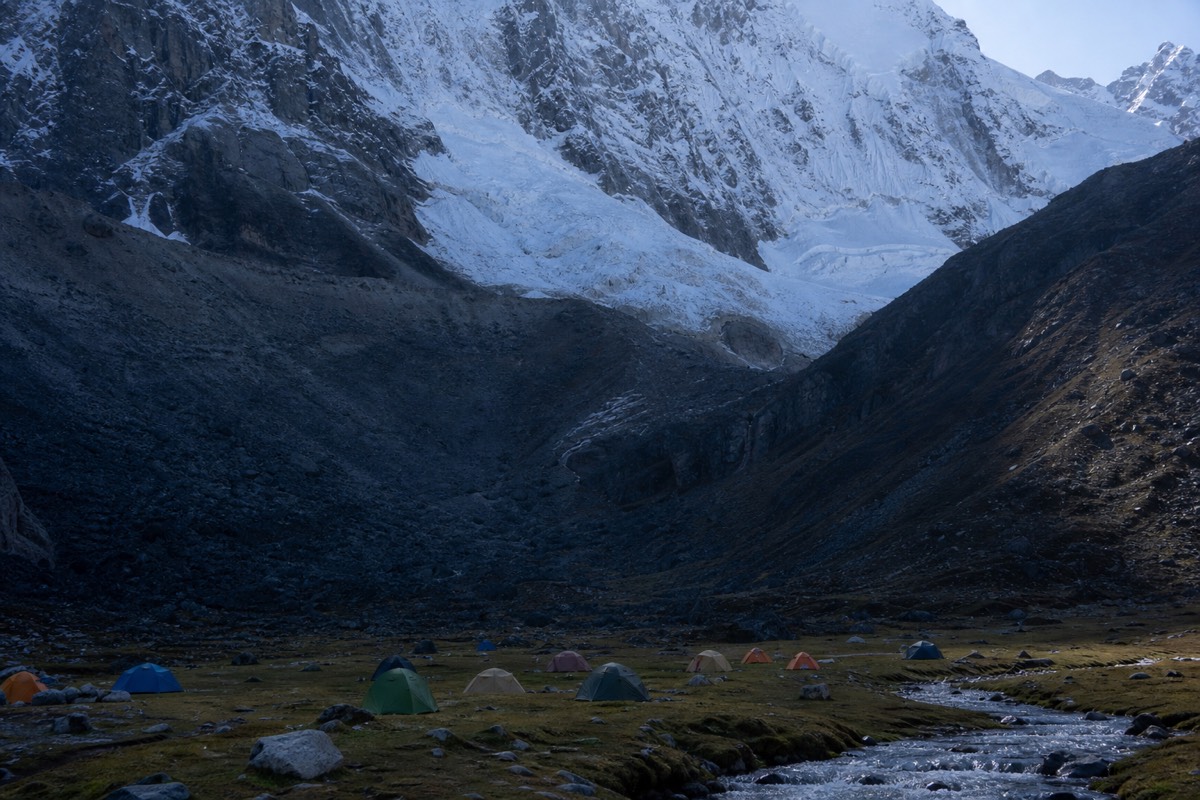
Neither trek wins outright. The Salkantay Trek ends at Machu Picchu and fills with hikers near Cusco. The Santa Cruz Trek in the Cordillera Blanca costs less, stays far quieter, and packs denser glacier-and-lake scenery into four days. Choose Salkantay for the ruins, Santa Cruz for wild mountains and value.
Keep preparation days separate from the booked itinerary. A supported Santa Cruz crossing combines four days of camps and walking with transport from Huaraz.
Booking Choice: Choose the route, allow time to adjust to altitude, then compare the full quote including excluded fees and personal gear. View Four-Day Santa Cruz Trek
What Is Each Trek Actually About?
These are two different promises. Salkantay is a route to Machu Picchu that happens to cross a high pass; Santa Cruz is a pure mountain traverse with no ruins at the end and no reason to hurry.
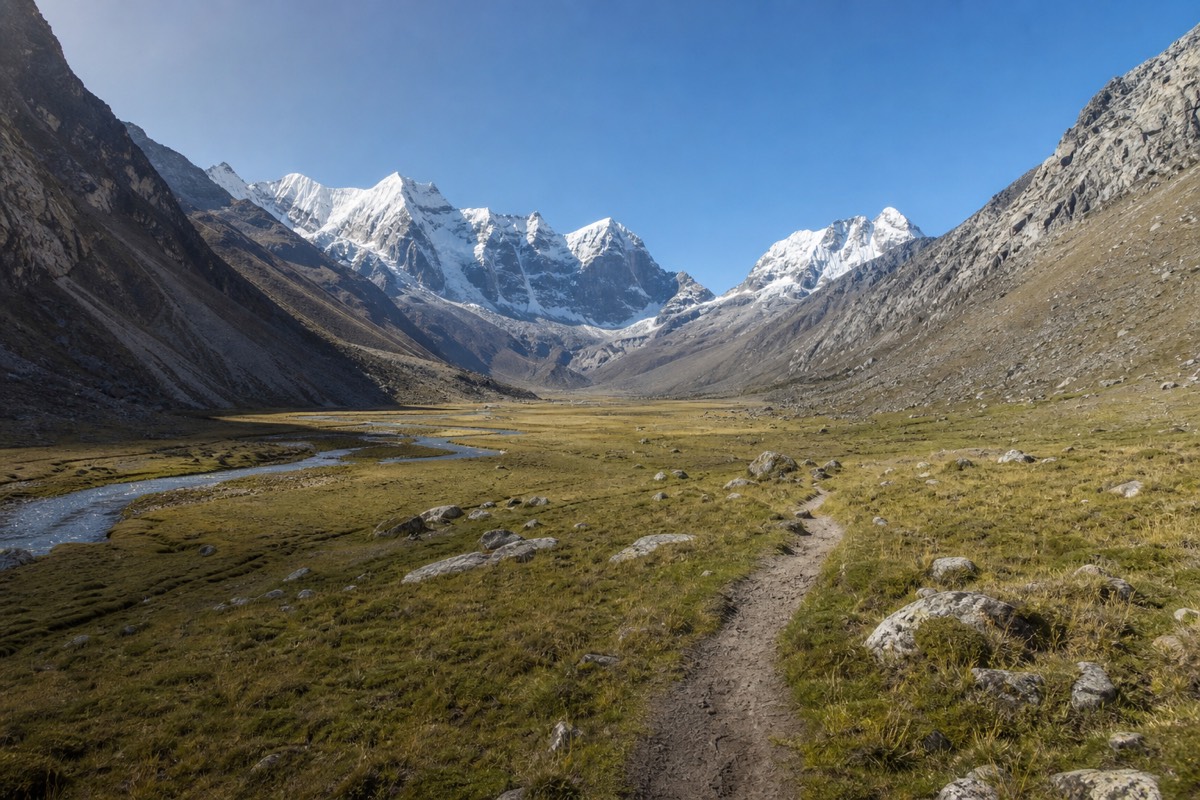
The Salkantay Trek runs roughly 74 km over four to five days in the Cusco region, topping out at the Salkantay Pass near 4,650 m before dropping toward Aguas Calientes and the citadel. The Santa Cruz Trek covers about 50 km over four days in Ancash, crossing the 4,750 m Punta Union pass inside Huascarán National Park, a UNESCO World Heritage Site. One ends at the most famous ruin on the continent. The other ends at a quiet trailhead below glaciers, which is exactly the point for many trekkers. Both are open public routes with no timed-entry permit, unlike the Classic Inca Trail, so you can book either on shorter notice.
| Feature | Santa Cruz Trek | Salkantay Trek |
| Region | Ancash, Cordillera Blanca | Cusco |
| Length | About 50 km, 4 days | About 74 km, 4 to 5 days |
| Highest point | Punta Union, 4,750 m | Salkantay Pass, 4,650 m |
| Big finish | Alpamayo viewpoint, glacier lakes | Machu Picchu |
| Permit | None, park fee only | None, park fee only |
| Crowds | Low to moderate | High |
Which Is Cheaper, And Which Is More Crowded?
Santa Cruz wins both. A guided four-day Santa Cruz Trek starts around $390, and the trail sees a fraction of the foot traffic that funnels toward Machu Picchu every day.
Salkantay became popular precisely because it is the budget-friendly, permit-free alternative to the Classic Inca Trail, so it now carries real crowds in high season, especially on the approach to Aguas Calientes. Santa Cruz has no such bottleneck. You share the Punta Union pass with a handful of groups, not a queue. If the numbers matter, our breakdown of what the Santa Cruz Trek costs lays out guided versus independent budgets. The short version: Ancash stretches your money further than Cusco. Cusco also runs on tourist pricing across hotels, meals and transfers, while Huaraz stays a working mountain town, so the saving is not just the trek fee, it is the whole week around it.
Which Has Better Scenery, And Which Is Harder?
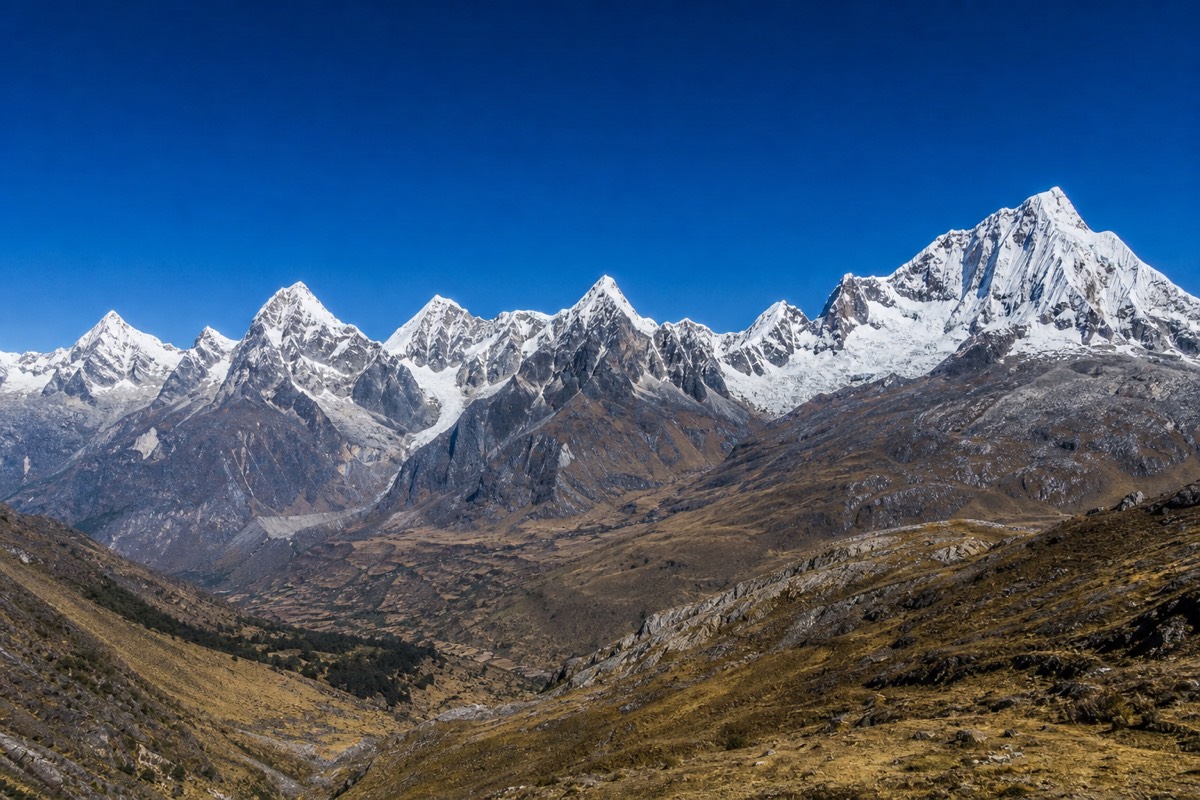
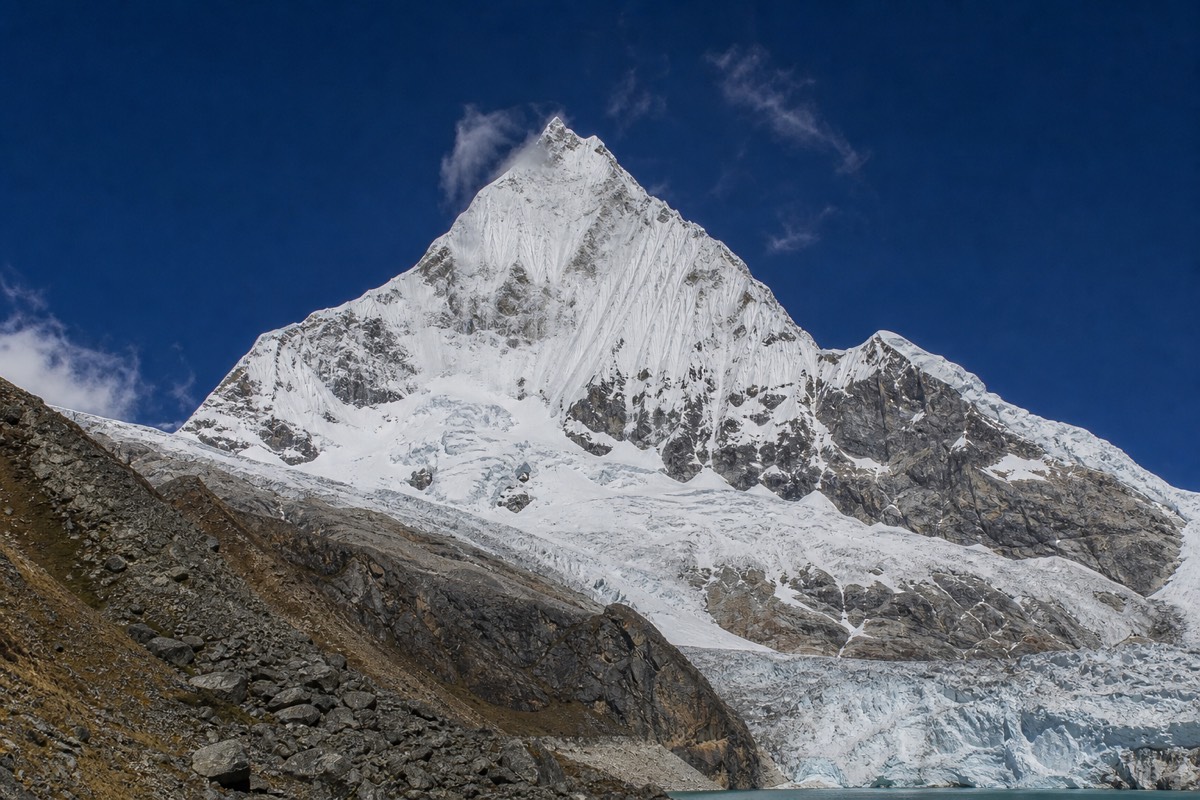
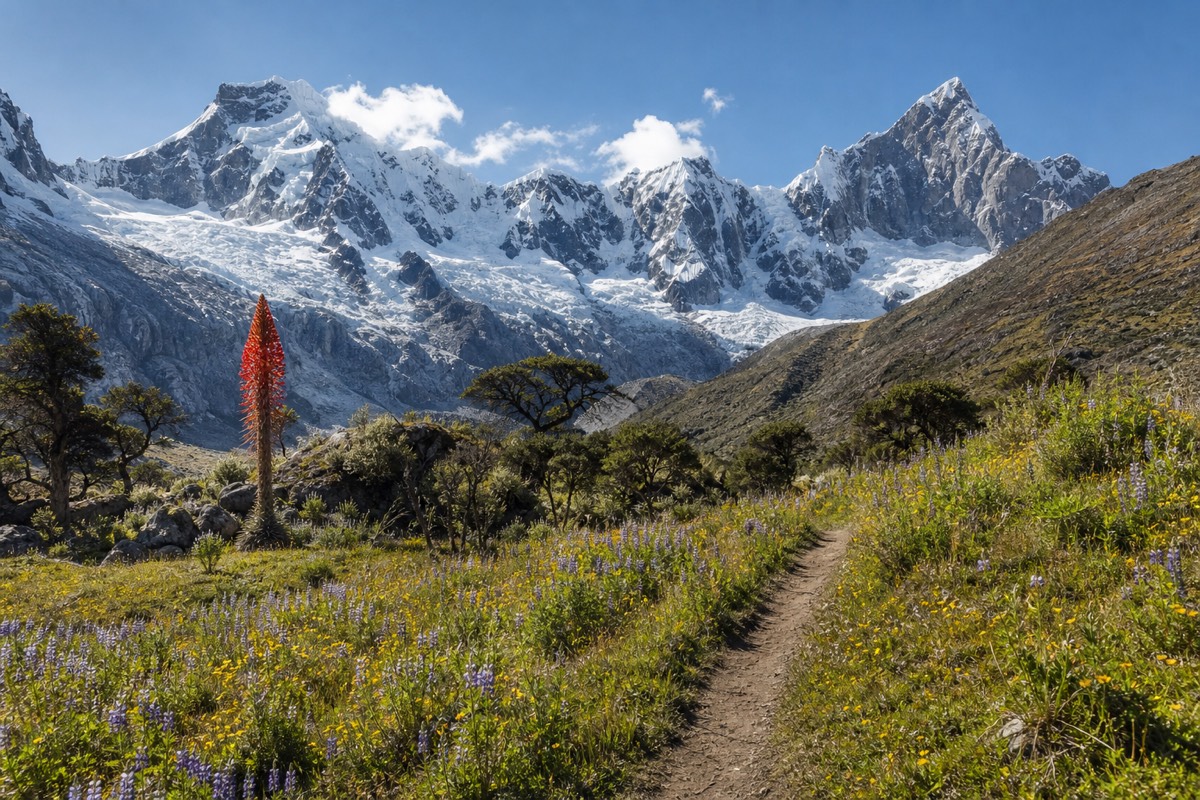
Scenery is subjective, but the styles differ. Santa Cruz is wall-to-wall high alpine: ice peaks, moraine lakes and the fluted face of Alpamayo. Salkantay trades some of that altitude for range, dropping from glaciers into cloud forest.
On difficulty, the two are close. Santa Cruz has the higher pass at 4,750 m and stays high longer, so acclimatization is the deciding factor. Salkantay climbs less in total but adds a long descent into humid jungle terrain. Both demand a few days of adjusting to thin air first. If you are basing yourself in Ancash, a couple of days acclimatizing in Huaraz before the trek makes either high pass far more comfortable. Fit hikers finish both; unacclimatized ones struggle on both.
Weather shapes the two differently as well. Santa Cruz stays cold and dry through its season, with hard frosts at the high camps and sharp, clear light. Salkantay swings from alpine cold at the pass to warm, damp air in the cloud forest below, so you pack for a wider spread of conditions. Neither route is technical, and neither needs ropes or crampons, but both punish a rushed itinerary. The CDC advises a gradual ascent and a rest day before serious effort at altitude, guidance that applies equally to either trek.
How Do You Choose Between Them?
Start with one question: do you want to walk to Machu Picchu? If yes, take Salkantay. If you would rather trade the ruins for emptier trails and sharper mountains, Santa Cruz is the better trek.
| Your priority | The better pick |
| Reaching Machu Picchu on foot | Salkantay |
| Fewest crowds | Santa Cruz |
| Lower cost | Santa Cruz |
| Densest glacier and lake scenery | Santa Cruz |
| Cloud forest and variety | Salkantay |
| Highest single pass | Santa Cruz (4,750 m) |
There is a middle path too. The Cashapampa-to-Vaqueria route on our Llanganuco version adds the turquoise Llanganuco lakes to the classic circuit, and trekkers who fall for the range often follow up with Santa Cruz versus the Huayhuash circuit for something longer and wilder. You cannot combine Santa Cruz and Salkantay in a single week; they sit in different corners of Peru, hundreds of kilometres apart.