Best Cordillera Blanca Treks From Huaraz
Huaraz is the launch pad for the Cordillera Blanca, and the routes that leave it run from a four-day classic to a twenty-day summit expedition. Here is how they compare, and which one fits you.
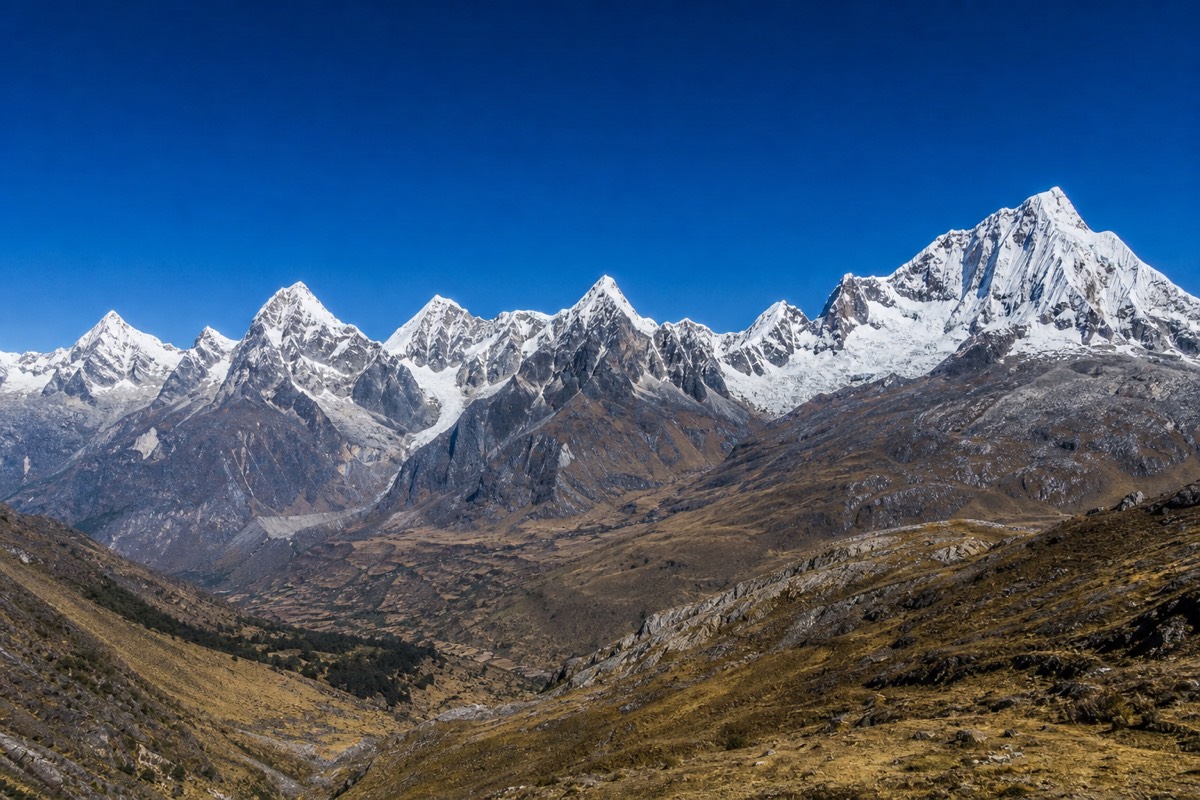
The mountains on Peru postcards that are not Machu Picchu are almost always the Cordillera Blanca. This is the highest tropical mountain range on the planet, a wall of glaciated peaks an hour or two above the town of Huaraz, holding more than thirty summits over 6,000 metres. Most visitors come to walk among them for a few days. A smaller number come to climb. The routes below all begin in Huaraz, and they are not interchangeable.
Keep preparation days separate from the booked itinerary. A supported Santa Cruz crossing combines four days of camps and walking with transport from Huaraz.
Booking Choice: Choose the route, allow time to adjust to altitude, then compare the full quote including excluded fees and personal gear. View Four-Day Santa Cruz Trek
Cordillera Blanca routes by days on the trail
Durations from the operator listings and the classic Cordillera Blanca circuits, 2026. Confirm current dates and prices on the live listings.
Which Cordillera Blanca Trek Should You Choose From Huaraz?
The classic four-day Santa Cruz Trek suits most first-time Andean trekkers. The private Llanganuco version fits couples and small groups who want their own pace and hotel-to-hotel service. The twenty-day Alpamayo and Chopicalqui expedition is for experienced high-altitude climbers, and the Huayhuash circuit is the longer, harder sibling for seasoned walkers.
There is no single best Cordillera Blanca trek, only the right one for your experience, your time, and your budget. The good news is that the range rewards a wide spread of ability. A reasonably fit walker with two or three acclimatization nights can complete the Santa Cruz circuit and stand on a 4,750 metre pass with an honest sense of achievement. A climber with prior time above 5,000 metres can point at Alpamayo and mean it. What decides your choice is usually days available and altitude experience, not raw fitness.
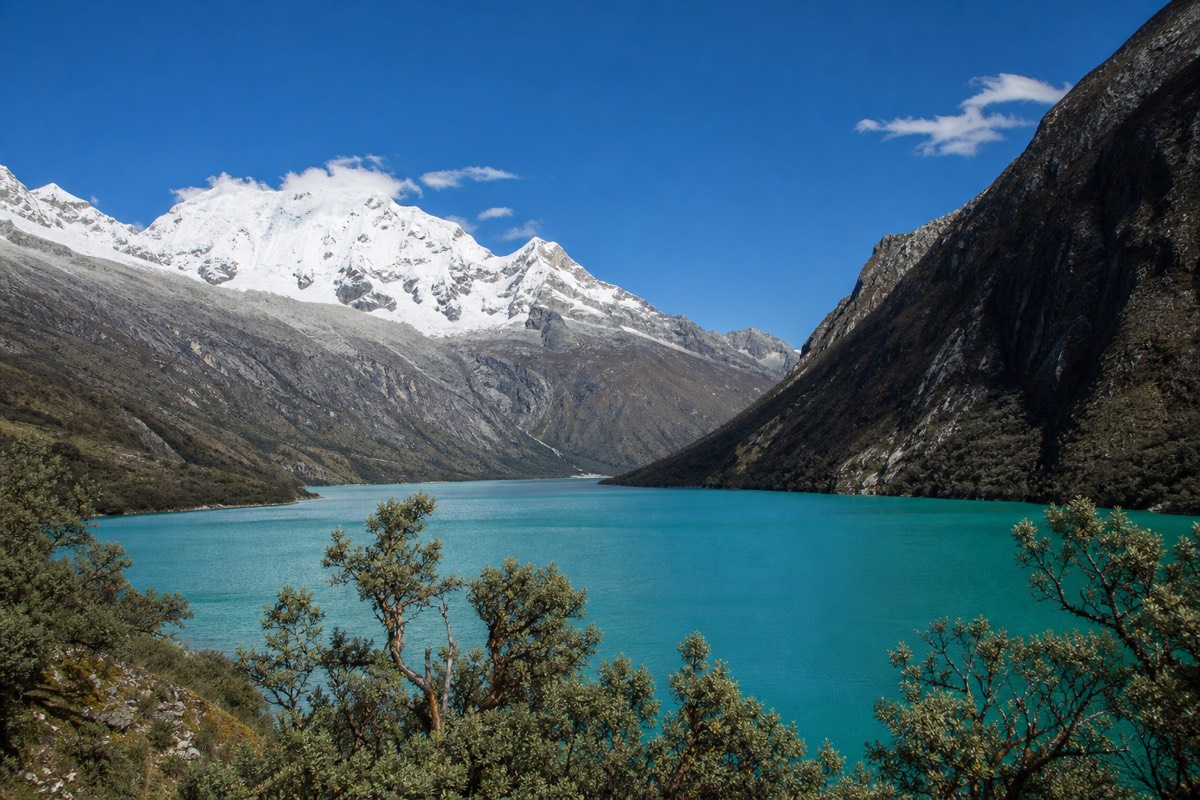
The table below sets the main options side by side. Prices are what you pay booking through the operators online, so treat them as a starting point and check the live listing before you commit. Every route runs inside Huascarán National Park, and the trailheads are all reached from Huaraz.
| Route | Days | Highest point | Difficulty | Best for | From (approx.) |
|---|---|---|---|---|---|
| Santa Cruz Trek (classic) | 4 | Punta Union 4,750 m | Moderate to hard | First big Andes trek | $390 / person |
| Santa Cruz Llanganuco (private) | 4 | Punta Union 4,750 m | Moderate to hard | Couples, small private groups | Party-specific quote |
| Huayhuash circuit | 8 to 10 | Passes near 5,000 m | Hard | Seasoned multi-day trekkers | Varies by operator |
| Alpamayo and Chopicalqui expedition | 20 | Chopicalqui 6,354 m | Technical, expert | Experienced climbers | $3,970 / person |
| Day hikes (Laguna 69, Churup) | 1 | Around 4,600 m | Moderate | Acclimatization before a trek | Low cost |
If you read only one row, read the first. The four-day Santa Cruz is the route the vast majority of visitors want, and the rest of this guide keeps circling back to it as the reference point.
Why Is The Santa Cruz Trek The Flagship Cordillera Blanca Route?
The Santa Cruz Trek is a 45 to 50 kilometre circuit between the Cashapampa and Vaqueria trailheads, crossing the 4,750 metre Punta Union pass. It threads through Huascaran National Park, a UNESCO World Heritage Site, with almost none of the permit hassle of the Inca Trail, and it delivers turquoise lakes and glacier views at every camp.
Ask ten Huaraz guides for the trek they would send a first-timer on, and the answer is the same. The Santa Cruz circuit is non-technical, meaning no ropes, no crampons, and no mountaineering background. It covers roughly 50 kilometres over four days, beginning at Cashapampa in the south and finishing at Vaqueria in the north, or the reverse. The high point is Punta Union at 4,750 metres, a narrow saddle that opens onto a 360-degree panorama of Alpamayo, Quitaraju, Taulliraju and the Santa Cruz massif. Artesonraju, the peak that inspired the Paramount Pictures logo, sits in the same skyline.
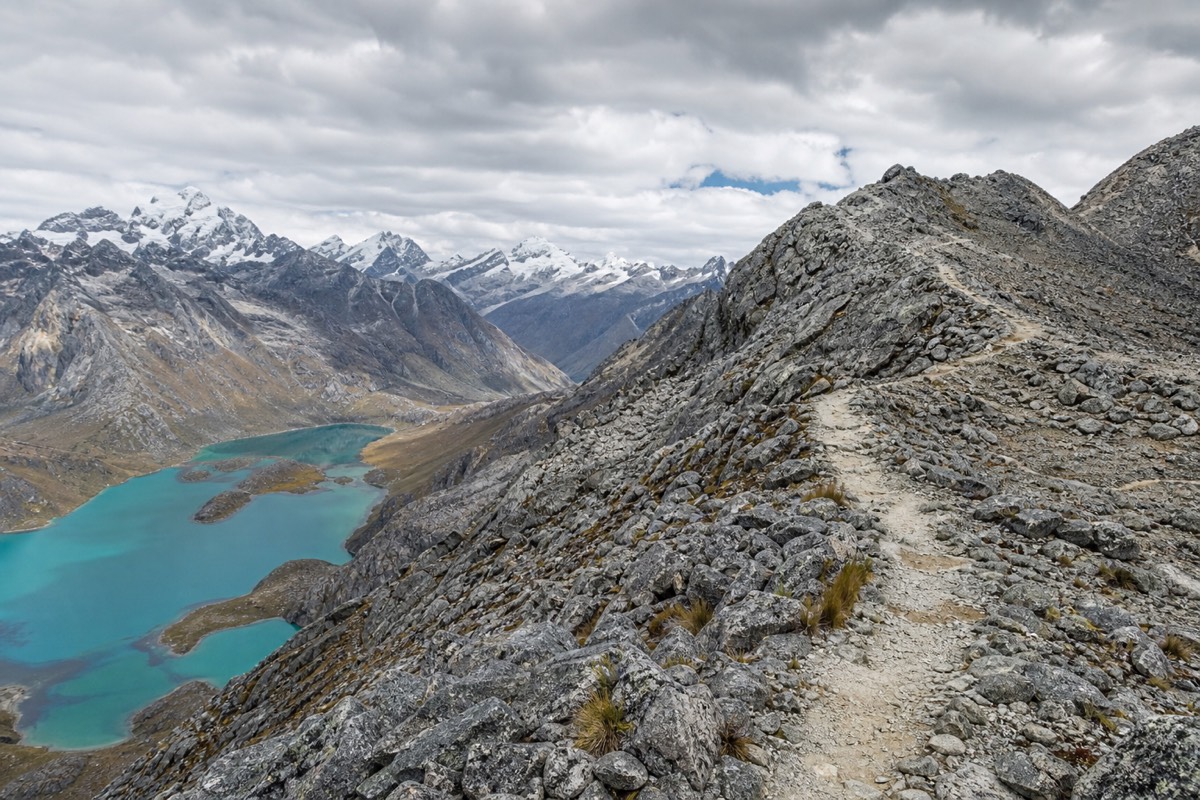
Unlike the Classic Inca Trail, the route has no daily permit cap. You pay an entrance fee for Huascarán National Park at the ranger station and walk. That single fact keeps the trail quiet by Andean standards: on a busy July day you might share a camp with twenty to fifty other trekkers, while the Inca Trail the same month runs at its 500-permit ceiling. For a fuller sense of the walk, read the day-by-day Santa Cruz Trek itinerary, which breaks down each camp and the pass crossing hour by hour.
The four-day version is the standard. Below is the shape of the classic small-group format, the guided 4-day Santa Cruz Trek most people book, running the Cashapampa to Vaqueria direction. Distances and altitudes come from the operator itinerary and the park route.
| Day | Route | Approx. distance | Camp / altitude | Highlight |
|---|---|---|---|---|
| 1 | Cashapampa to Llamacorral | 8 to 10 km | Llamacorral, 3,760 m | Canyon climb into the valley |
| 2 | Llamacorral to Taullipampa | 9 to 12 km | Taullipampa, 4,250 m | Glacial lakes below Taulliraju |
| 3 | Over Punta Union to Cachinapampa | 10 to 12 km | Cachinapampa, around 3,700 m | The 4,750 m pass, the big day |
| 4 | Cachinapampa to Vaqueria | 6 to 10 km | Return to Huaraz | Portachuelo Llanganuco viewpoint |
Total cumulative gain and loss over the four days is roughly 2,000 to 2,500 metres. It is genuinely high-altitude walking, but the effort is spread sensibly, and support mules carry the heavy gear so you hike with a daypack.
How Is The Private Llanganuco Variation Different?
The Santa Cruz Llanganuco trek is the private, all-gear-included version of the same four-day circuit, with a quote that depends on the selected party and date. It adds hotel pickup and drop-off, donkeys to carry your personal load, and extra acclimatization near the Llanganuco lakes, with the pace set by your own party rather than a shared group.
The scenery is the same range, but the experience is tuned differently. Where the classic departure joins a small mixed group at a fixed price per head, the Santa Cruz Llanganuco trek runs as a private booking with a mountain cook, a donkey driver, and transport arranged around your schedule. Do not divide an advertised starting price by your party size: confirm whether the selected quote is per person or for the entire booking.
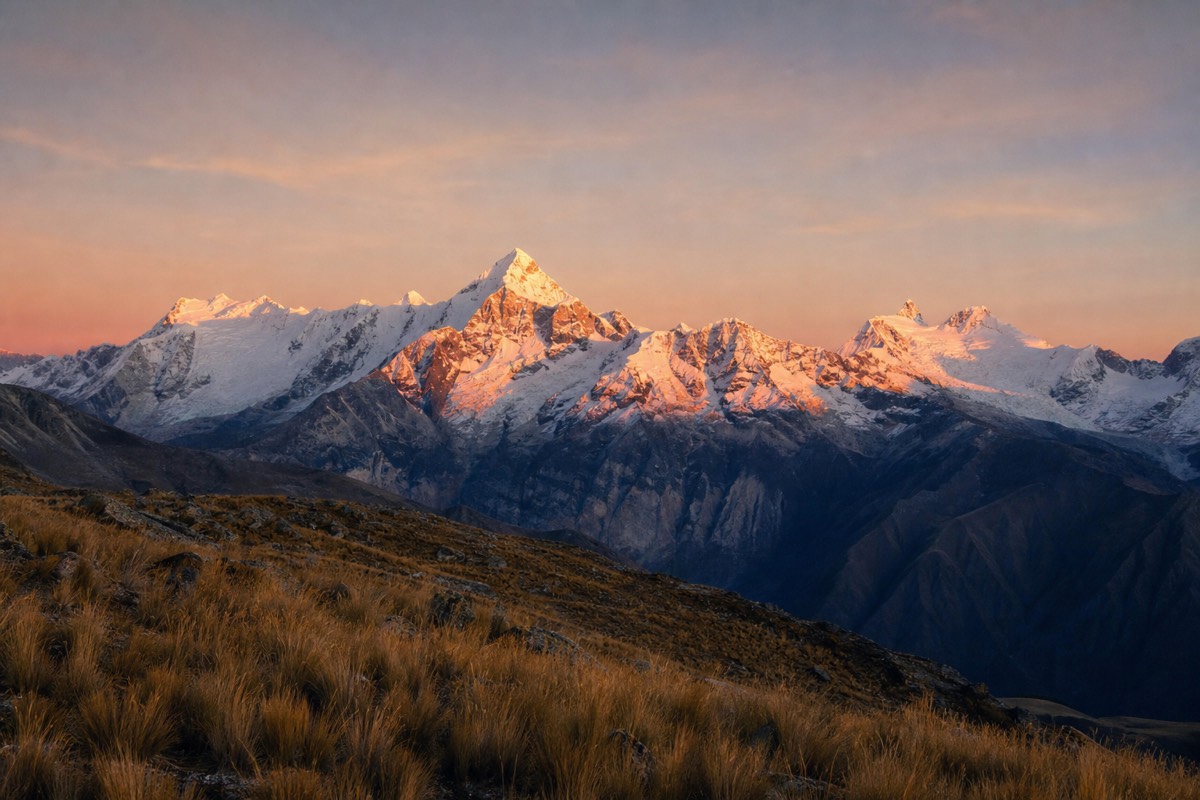
This version typically runs Cashapampa to Vaqueria, starting with a climb from the trailhead at 2,970 metres to Llamacorral, then Taullipampa, over Punta Union, and out past the Portachuelo de Llanganuco viewpoint at 4,767 metres above the twin turquoise lakes. Because the format is private, guides can add a rest hour, linger at a lake, or slow the pace on the pass without holding up strangers. The two four-day formats compare like this.
| Feature | Classic 4-day (group) | Llanganuco (private) |
|---|---|---|
| Group | Small mixed group | Your party only |
| From price | Around $390 / person | Check the quote for your party |
| Transfers | Huaraz pickup | Hotel-to-hotel pickup and drop-off |
| Load carrying | Support mules | Donkeys carry personal gear |
| Pace | Set by the group | Set by you |
Neither is better in the abstract. The group departure is the value pick and fills easily in peak months. The private trek is the choice when you want the mountain without the group dynamic, and it is worth booking ahead because you can coordinate the crew with your travel dates.
Who Is The 20-day Alpamayo And Chopicalqui Expedition For?
The 20-day Alpamayo and Chopicalqui expedition is a mountaineering trip, not a trek, from around $3,970 per person. It suits climbers with previous time above 5,000 metres and basic ice and crampon skills, pairing the Santa Cruz approach with technical summit attempts on Alpamayo (5,947 m) and Chopicalqui (6,354 m).
This is where the Cordillera Blanca stops being a walk. Alpamayo was once voted the most beautiful mountain in the world by an international survey of alpinists, and its southwest face is a near-perfect pyramid of fluted ice. Standing on it takes more than fitness. The 20-day Alpamayo and Chopicalqui expedition builds in acclimatization on training peaks before the summit pushes, then tackles Alpamayo and its neighbour Chopicalqui, at 6,354 metres one of the range's highest summits.
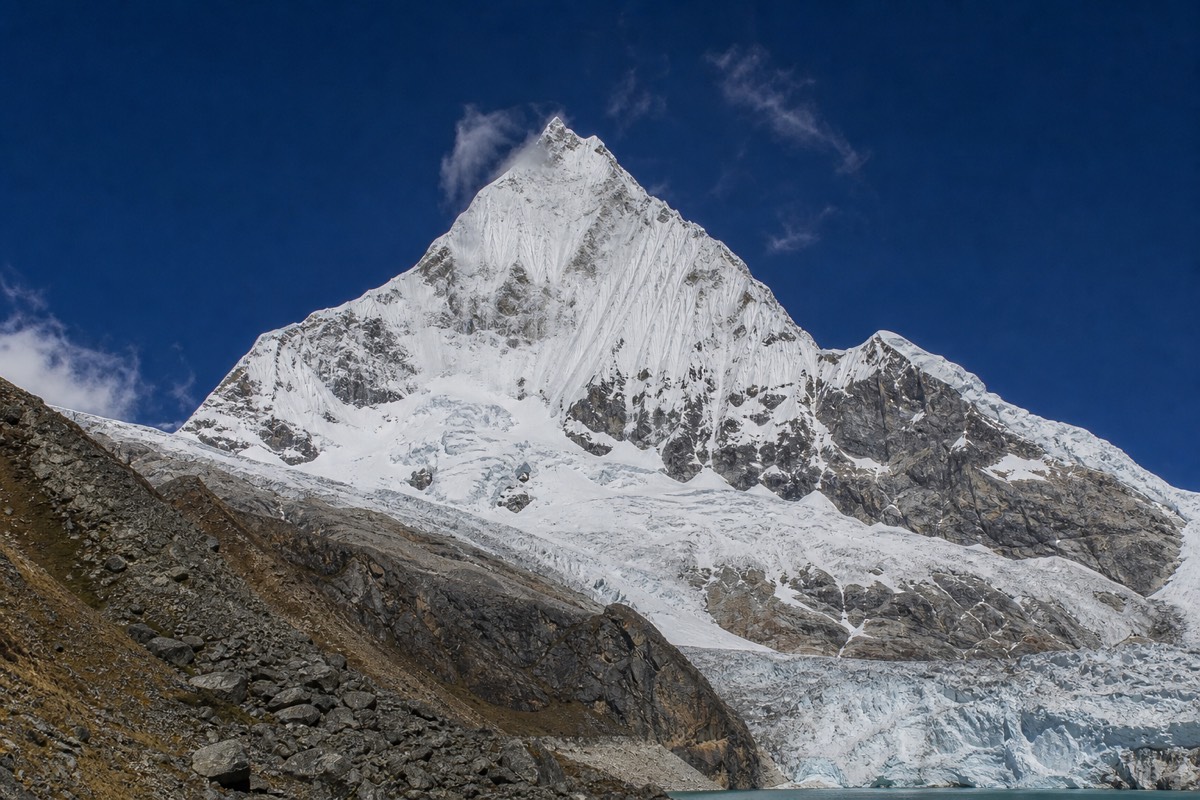
Ask the expedition operator to confirm its current rescue arrangements, communication equipment and required climbing skills before committing. You do not need a full alpinist resume, because certified guides manage the technical sections at a low client ratio, but you do need honest experience at altitude and a tolerance for cold, exposed camps. Book it months ahead: the dry-season summit windows in June and July are the reliable ones, and the climbing slots are limited.
How Does Santa Cruz Compare With The Huayhuash Circuit?
The Huayhuash circuit is the Cordillera Blanca region's harder sibling, a remote 8 to 10 day loop with a string of passes near 5,000 metres and far fewer bailout points. Santa Cruz is shorter, lower, better supported, and the sensible first Andean trek. Save Huayhuash for after you know how your body handles multiple days at altitude.
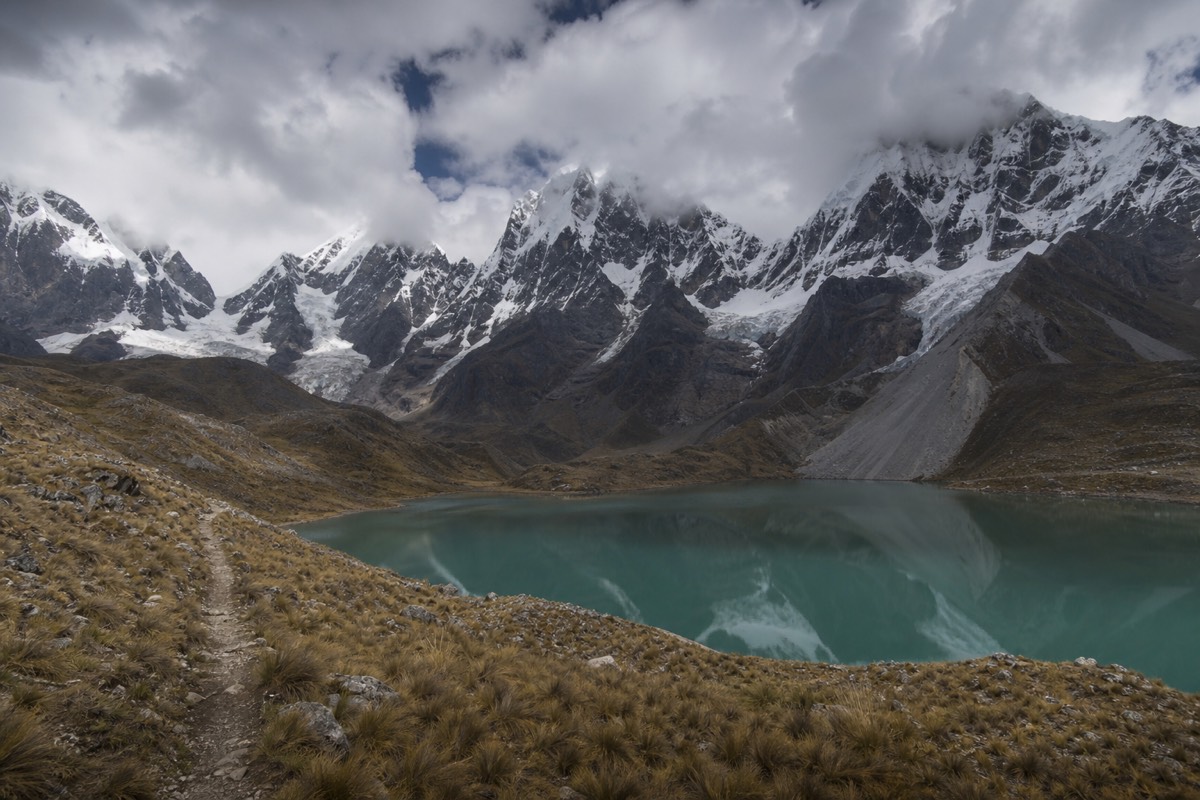
The Cordillera Huayhuash sits south of the Blanca and runs to a different rhythm. Where Santa Cruz crosses one big pass, Huayhuash strings together many, day after day, at elevations that rarely drop for long. It is more committing, more remote, and colder at night, with the payoff of some of the most concentrated mountain scenery in the Andes. If you are weighing Santa Cruz versus the Huayhuash circuit, the honest filter is prior multi-day altitude experience. The comparison below lays out the practical differences.
| Factor | Santa Cruz Trek | Huayhuash circuit |
|---|---|---|
| Typical length | 4 days | 8 to 10 days |
| High passes | One (Punta Union 4,750 m) | Several near 5,000 m |
| Remoteness | Popular, well-served | Remote, few exits |
| Support | Mules, easy logistics | Mules, longer resupply |
| Right for | First Andean multi-day trek | Experienced trekkers |
Plenty of trekkers do Santa Cruz one year and come back for Huayhuash the next. That order is deliberate, and most guides in Huaraz will steer a first-timer toward the shorter route first.
What Day Hikes Near Huaraz Should You Do First?
Before any multi-day trek, spend two or three days on Huaraz day hikes that climb high and sleep low. Laguna 69 at 4,600 metres, Laguna Churup at 4,450 metres, and gentler Laguna Wilcacocha near 3,725 metres all work as acclimatization while showing you the range. They are also superb walks in their own right.
Altitude is the single biggest reason people struggle on the Santa Cruz pass, and the fix is boring but effective: arrive early and walk high before you commit. Huaraz sits at roughly 3,050 metres, high enough to start adapting. From there, a day hike that touches 4,400 to 4,600 metres and returns to town for the night teaches your body the trick it needs on the trek. Laguna 69 is the famous one, a turquoise glacial lake reached by a 12 kilometre round trip with about 800 metres of climbing. For the acclimatization plan in detail, see our notes on acclimatizing in Huaraz before the trek, and if you are simply chasing scenery, the case for the prettiest hike in Peru starts here too.
| Day hike | High point | Round trip | Role |
|---|---|---|---|
| Laguna Wilcacocha | Around 3,725 m | Half day | Gentle first-day leg-stretch |
| Laguna Churup | 4,450 m | Full day | Steep, strong acclimatizer |
| Laguna 69 | 4,600 m | About 12 km | Classic pre-trek altitude day |
| Pastoruri glacier | Around 5,000 m | Short walk, high drive | High exposure, low effort |
Do at least one of these before the trek. The trekkers who skip them and start the pass the morning after arriving in Huaraz are the ones who spend Day 2 fighting a headache instead of enjoying the view.
When Is The Best Time To Trek The Cordillera Blanca?
The Cordillera Blanca dry season runs May to October, and June through August gives the clearest skies, driest trails, and the best odds of an unobstructed view from Punta Union. The wet season from November to April brings afternoon rain, mud, and clouds that often hide the peaks, though it is quieter and cheaper.
Weather decides how good a Cordillera Blanca trek feels more than any other single factor. In the dry months the mornings are almost always clear, which is why guided groups cross the high passes early before afternoon cloud builds. Nights at the high camps still drop to around zero or below, so warm layers are non-negotiable whatever the calendar says. The wet season is not off-limits, but the reward, those glacier panoramas, is exactly what cloud steals first.
| Window | Conditions | Crowds | Verdict |
|---|---|---|---|
| June to August | Driest, clearest, cold nights | Busiest | Peak season, book ahead |
| May and September to October | Mostly dry, good visibility | Moderate | Excellent shoulder months |
| November to April | Rain, mud, snow risk on passes | Quiet | Cheapest, least reliable views |
If your dates are flexible, aim for June to August and accept the cold. If they are not, the shoulder months either side still deliver more clear days than not.
How Do You Get To The Cordillera Blanca, And What Does It Cost?
Fly into Lima, then reach Huaraz by overnight bus in about seven to eight hours or by a short LATAM flight to Anta airport. From Huaraz, the Cashapampa trailhead is a two to two and a half hour drive. Budget the park entrance fee, transport, and either a guided package or independent food and gear.
Huaraz sits about 400 kilometres north of Lima, and almost everyone arrives on an overnight bus with operators like Cruz del Sur or Movil Bus, landing in the early morning. A limited LATAM service to Anta airport near the city is faster when it runs. Once in Huaraz, the trailheads are a short mountain drive away: Cashapampa is roughly two to two and a half hours through Yungay, and Vaqueria a little further via the Llanganuco valley. For the route logistics in full, our guide on how to reach the Cordillera Blanca covers buses, flights, and transfers, and if you are still weighing the town itself, here is whether Huaraz is worth visiting.
Costs split into fixed and flexible. The Huascarán National Park entrance fee is set by SERNANP, the national park authority, and paid in cash at the ranger station. On top of that sit transport to the trailhead, and then either a guided package that folds in the guide, cook, meals, camping gear, and park fees, or the do-it-yourself cost of buying and carrying all of that. For the full breakdown, including guided versus independent numbers, see what the Santa Cruz Trek costs.
| Cost item | Typical range | Notes |
|---|---|---|
| Lima to Huaraz bus | Around $20 to $45 each way | Overnight, 7 to 8 hours |
| Huaraz to Cashapampa transport | PEN 30 to 60 shared, up to PEN 400 private | Per person shared, per vehicle private |
| Huascaran park entrance | Set by SERNANP, paid in cash | Confirm the current rate at the gate |
| Guided 4-day Santa Cruz | From around $390 / person | Listed guide, meals and gear; fees excluded |
Choose the trek that matches your experience, give yourself the acclimatization days, and the Cordillera Blanca does the rest. For most people reading this, that means the classic four-day Santa Cruz, booked ahead so the guide and mule crew are confirmed for your dates.