Santa Cruz Trek Vs Huayhuash: Which To Choose
Two of Peru's greatest treks are booked from the same town. Here is how the accessible classic and the harder circuit really compare.
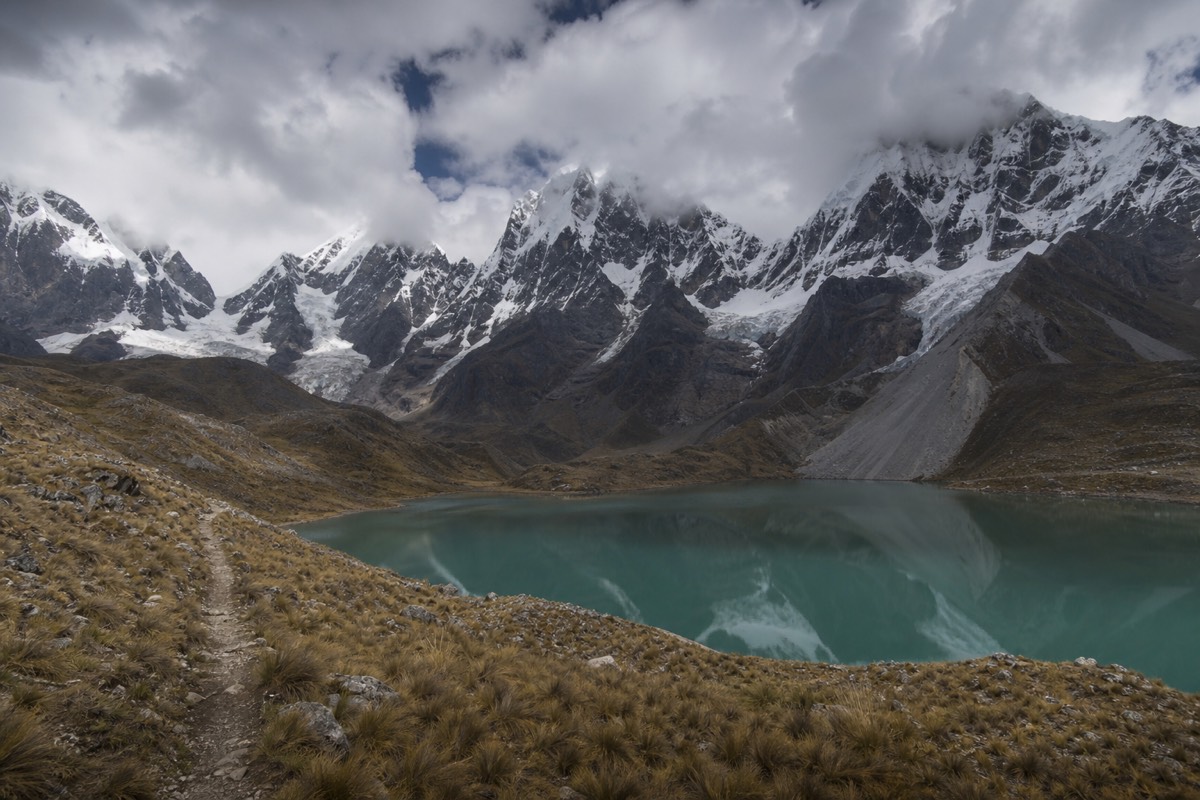
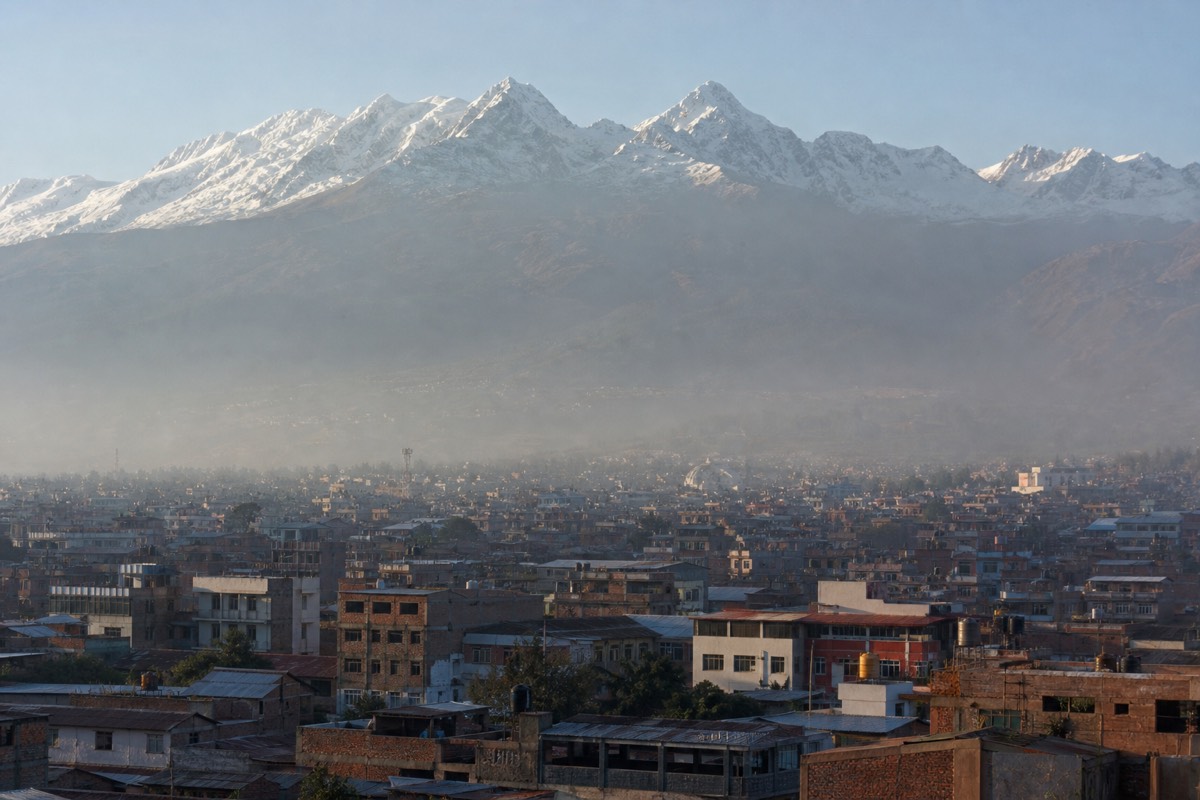
Walk into any trekking office in Huaraz and two names come up first: Santa Cruz and Huayhuash. They share a base town, a season, and the same thin Andean air, yet they ask very different things of the people who walk them. One is a four-day introduction to the high Cordillera Blanca that a fit newcomer can finish and love. The other is a week-and-a-half circuit that seasoned trekkers save for and still find humbling.
Keep preparation days separate from the booked itinerary. A supported Santa Cruz crossing combines four days of camps and walking with transport from Huaraz.
Booking Choice: Choose the route, allow time to adjust to altitude, then compare the full quote including excluded fees and personal gear. View Four-Day Santa Cruz Trek
This guide lays the two side by side on the things that actually decide a trip: how many days you need, how hard each one is, what you will see, what it costs, and how remote it feels. Every figure here is checked against operator listings and public references rather than guessed, so you can plan against real numbers.
At a glance: Santa Cruz vs the Huayhuash circuit
Figures cross-checked against operator listings and public trek references, 2026. Huayhuash numbers are for the full classic circuit; shorter loops exist.
Santa Cruz Or Huayhuash: Which Trek Should You Choose?
Choose Santa Cruz if you have four days, want the highest reward for the least commitment, and are new to multi-day altitude. Choose the Huayhuash circuit if you have eight to twelve days, solid trekking legs, and want one of the most remote high-mountain loops on Earth. Both start from Huaraz.
The short version is that Santa Cruz is the accessible classic and Huayhuash is the harder, longer prize. Santa Cruz packs a single spectacular pass, turquoise lakes, and a wall of 6,000-metre peaks into a trek most reasonably fit people can complete. It is the natural first big trek in the region and the one most visitors to Huaraz book.
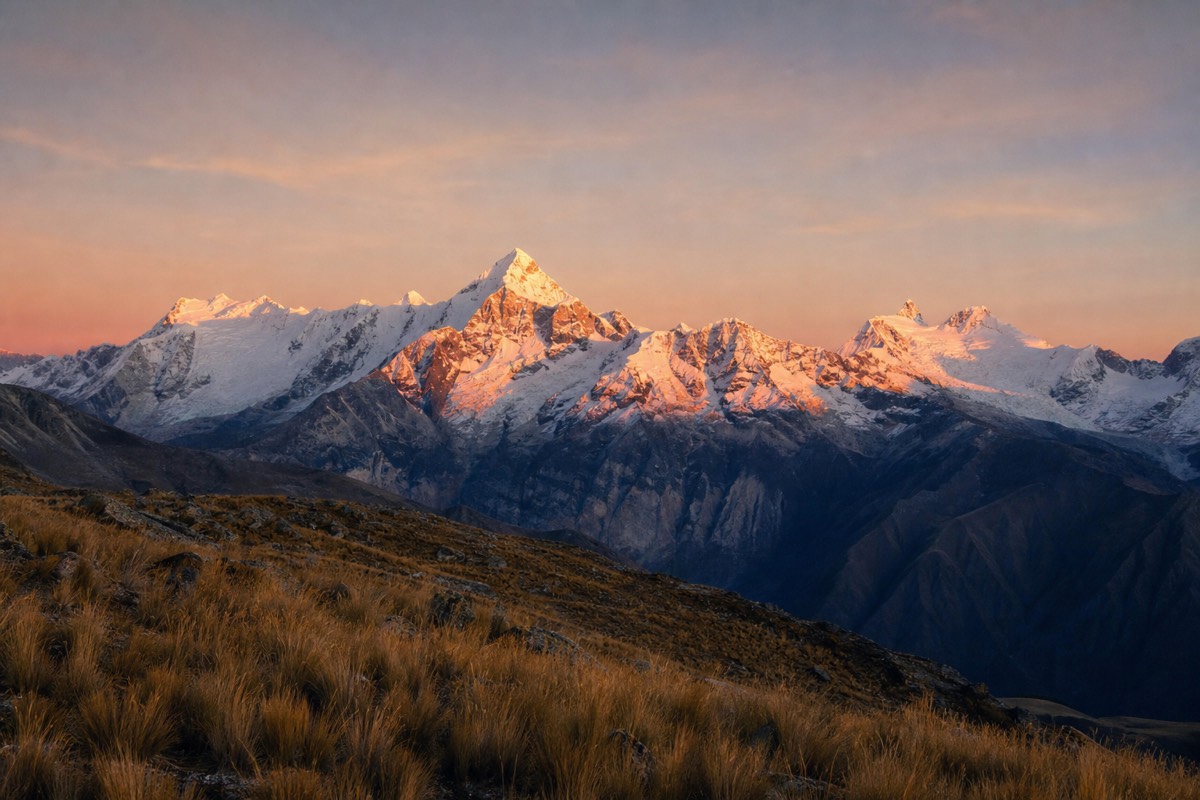
Huayhuash is a different order of trip. The full circuit loops an entire compact range south of the Cordillera Blanca, crossing pass after pass above 4,500 metres and camping high for days on end. It rewards you with scenery many trekkers call the finest they have walked, but it demands fitness, time, and a tolerance for cold, altitude, and remoteness. If you are weighing a first Andean trek, start with the day-by-day Santa Cruz Trek itinerary and treat Huayhuash as the step after.
How Do The Two Treks Compare On Days, Distance And Altitude?
Santa Cruz is roughly 45 to 50 km over four days with one high point at 4,750 m. The classic Huayhuash circuit runs about 130 to 135 km over eight to twelve days, crossing up to twelve passes above 4,500 m and topping out near 5,000 m. Huayhuash is close to three times the distance and holds you higher for far longer.
The numbers tell most of the story. Santa Cruz crosses the Punta Union pass at 4,750 metres (15,584 feet) once, on day two or three depending on direction, and spends the rest of the route in valleys between roughly 3,700 and 4,250 metres. Total cumulative gain and loss lands around 2,000 to 2,500 metres over the whole trek. It is one big effort framed by gentler days.
Huayhuash never really lets up. The classic loop strings together a series of high passes, with the highest, usually cited as Punta Cuyoc or San Antonio, sitting close to 5,000 metres. Camps routinely sit above 4,000 metres, so your body works through cold nights at altitude night after night. That sustained exposure, more than any single climb, is what makes the circuit demanding.
| Measure | Santa Cruz Trek | Huayhuash circuit (classic) |
|---|---|---|
| Typical length | 4 days, 3 nights | 8 to 12 days |
| Distance | 45 to 50 km | 130 to 135 km |
| Highest point | Punta Union, 4,750 m | near 5,000 m (Cuyoc / San Antonio) |
| Passes above 4,500 m | 1 major | up to 12 |
| Typical camp altitude | 3,700 to 4,250 m | 4,000 to 4,750 m |
| Trailhead access from Huaraz | 2 to 2.5 hours | 3 to 4 hours (via Chiquian / Llamac) |
Both ranges are reached from Huaraz, but the approach differs. Santa Cruz trailheads at Cashapampa and Vaqueria sit two to two and a half hours away. Huayhuash begins farther south, past the town of Chiquian and the village of Llamac, so a longer transfer and often an extra logistics day are part of the plan.
Which Trek Is Harder, And Why?
Huayhuash is clearly harder. Santa Cruz asks for one strong day over a single 4,750 m pass; Huayhuash asks for eight-plus days of repeated high passes, higher camps, colder nights, and more self-sufficiency. A fit hiker with good acclimatization manages Santa Cruz. Huayhuash rewards prior multi-day altitude experience and real endurance.
Difficulty on these treks comes from three things stacked together: altitude, daily effort, and how many days you repeat that effort. Santa Cruz concentrates its hardest work into the day-two climb to Punta Union, a steep haul over loose scree with real altitude exposure. Get over that, acclimatized and paced, and the rest is manageable. The route is well marked and busy enough that help is rarely far.
Huayhuash multiplies every one of those factors. You cross a high pass most days, descend, then climb the next. Weather turns fast, sections are genuinely remote with no phone signal, and resupply is limited. None of it is technical in the climbing sense on the trekking circuit itself, but the cumulative load on legs, lungs, and morale is far greater. This is why proper preparation matters, and why acclimatizing in Huaraz before the trek is not optional for either route.
| Difficulty factor | Santa Cruz | Huayhuash |
|---|---|---|
| Peak single-day effort | High (pass day) | High, repeated |
| Days of sustained altitude | 2 to 3 | 8 to 12 |
| Night cold exposure | Cold, 0 to -10 C | Colder, higher camps |
| Remoteness / rescue distance | Moderate | Significant |
| Fitness needed | Good general fitness | Strong, trek-specific |
| Recommended experience | First big trek possible | Prior multi-day altitude |
A useful test: if you have never slept above 4,000 metres or strung several long hiking days together, Santa Cruz is the honest choice. Come back for Huayhuash once the high camps of the Cordillera Blanca feel familiar rather than daunting.
How Does The Scenery Differ Between The Ranges?
Both deliver world-class high-Andes scenery, but with different character. Santa Cruz frames turquoise glacial lakes and a fluted wall of famous peaks, seen mostly from valley floors and one dramatic pass. Huayhuash surrounds you with jagged 6,000 m summits and aquamarine lagoons from every angle, a more relentless, immersive mountain amphitheatre.
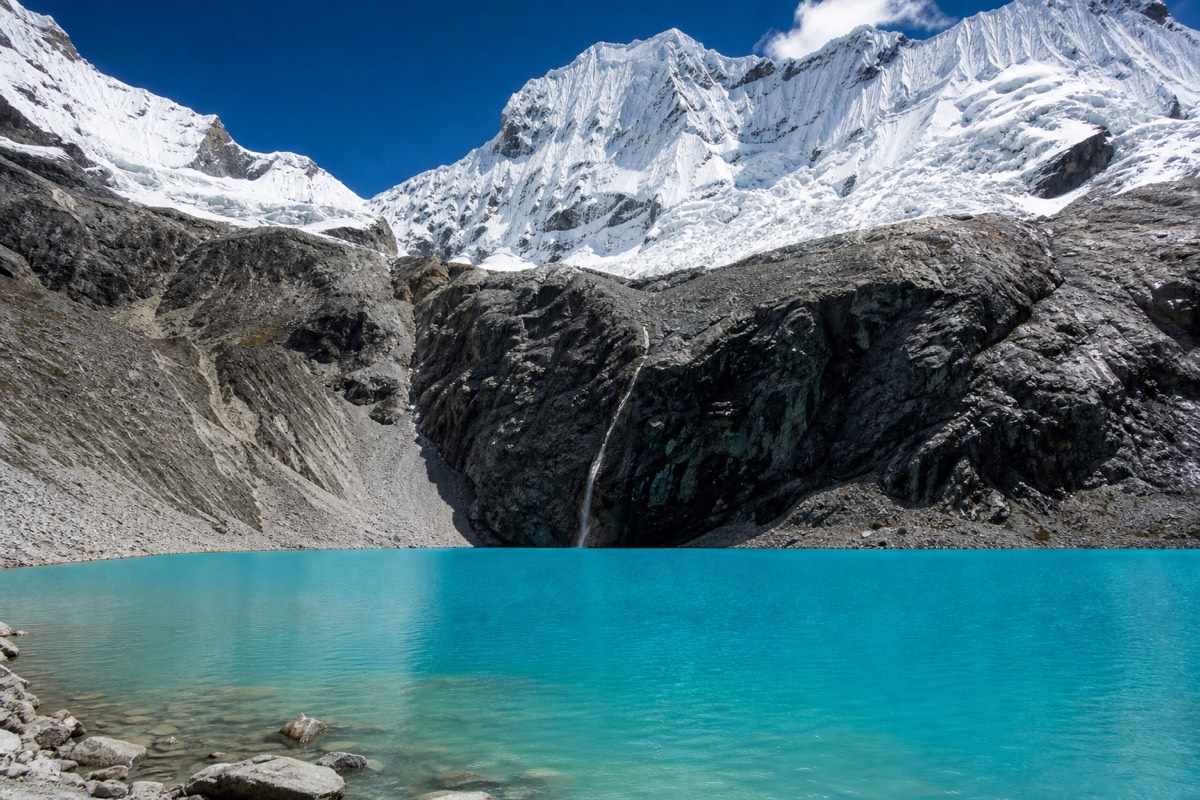
Santa Cruz is a valley trek with a grandstand finish. You walk up the Quebrada Santa Cruz past lakes like Ichicocha and Jatuncocha, camp beneath Taulliraju, and top out at Punta Union with a 360-degree sweep across Alpamayo, Quitaraju, and the Santa Cruz massif. Alpamayo, at 5,947 metres, is often voted one of the most beautiful mountains in the world, and the trek exists partly to put you in front of it. The route sits inside Huascaran National Park, a UNESCO World Heritage Site that protects the highest tropical mountain range on the planet, crowned by Huascaran itself at 6,768 metres.
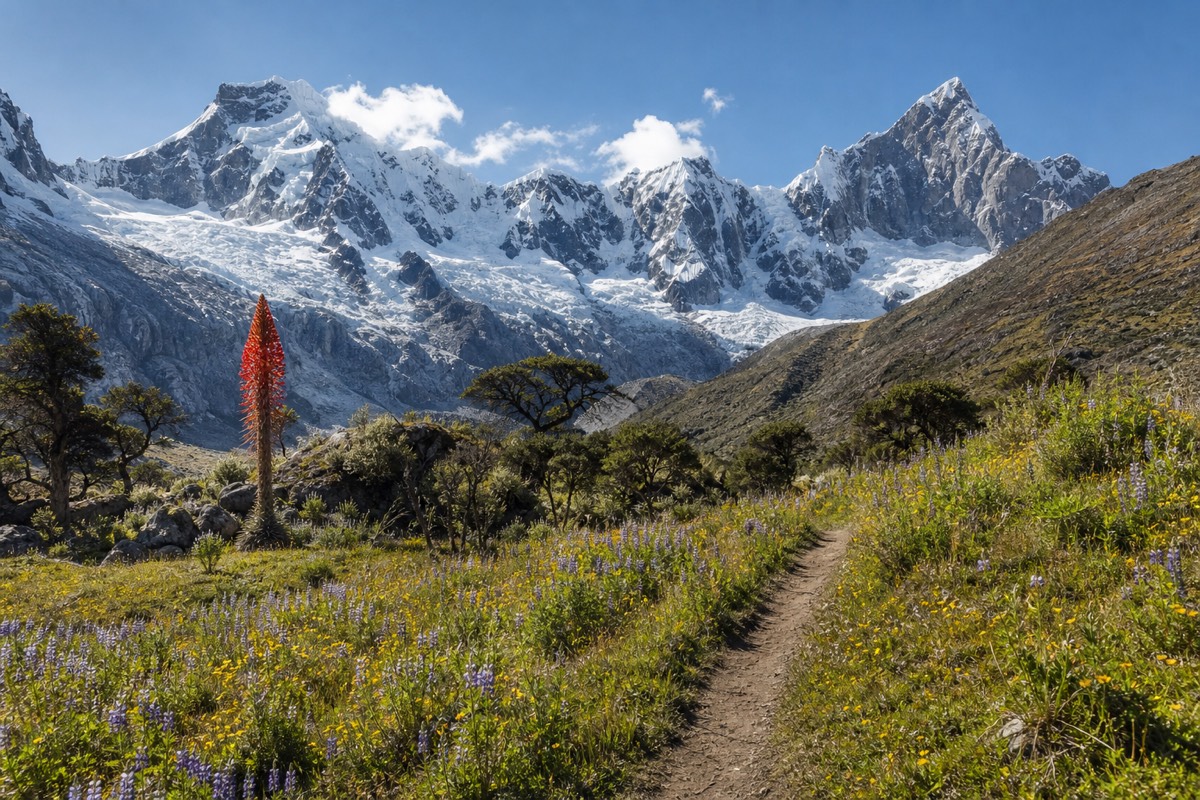
Huayhuash is a full-circle experience. Because you loop the range, the peaks rotate around you: Yerupaja, the second-highest mountain in Peru, Siula Grande, made famous by Joe Simpson's survival story in Touching the Void, and a chain of glacier-hung summits reflected in lagoons like Carhuacocha and Viconga. Trekkers who have done both often say Santa Cruz has the single best pass view and Huayhuash has the more sustained, overwhelming scenery.
| Scenery signature | Santa Cruz | Huayhuash |
|---|---|---|
| Landmark peaks | Alpamayo, Taulliraju, Quitaraju | Yerupaja, Siula Grande, Jirishanca |
| Signature lakes | Ichicocha, Jatuncocha | Carhuacocha, Viconga, Mitucocha |
| Viewpoint style | One grand pass, valley walking | Ringed by peaks, pass after pass |
| Hot springs on route | No | Yes (Viconga) |
| Overall feel | Accessible showcase | Wild, immersive circuit |
If your goal is to stand once in front of Alpamayo and remember it forever, Santa Cruz delivers. If you want to live inside a range of giants for a week, Huayhuash is unmatched. For a different flavour of famous trek entirely, some travellers also weigh Santa Cruz compared with the Salkantay Trek near Cusco.
What Does Each Trek Cost From Huaraz?
Guided Santa Cruz treks are far cheaper because they are shorter. The listed four-day Santa Cruz trip starts from a per-person quote, with fees and extras separate, while the classic guided Huayhuash circuit costs several times more thanks to its length, extra staff, and multiple community fees. Independent trekking cuts both, but Huayhuash still carries higher fixed costs.
The gap comes down to days on the mountain. Every extra day adds guide wages, cook wages, food, mule support, and camping logistics, so an eight-to-twelve-day circuit multiplies the cost of a four-day trek. On the accessible end, the guided 4-day Santa Cruz Trek starts from around $390 with a trekking guide and camp support, and meals handled. Prices move with season and group size, so treat that as a starting figure and check the live listing.
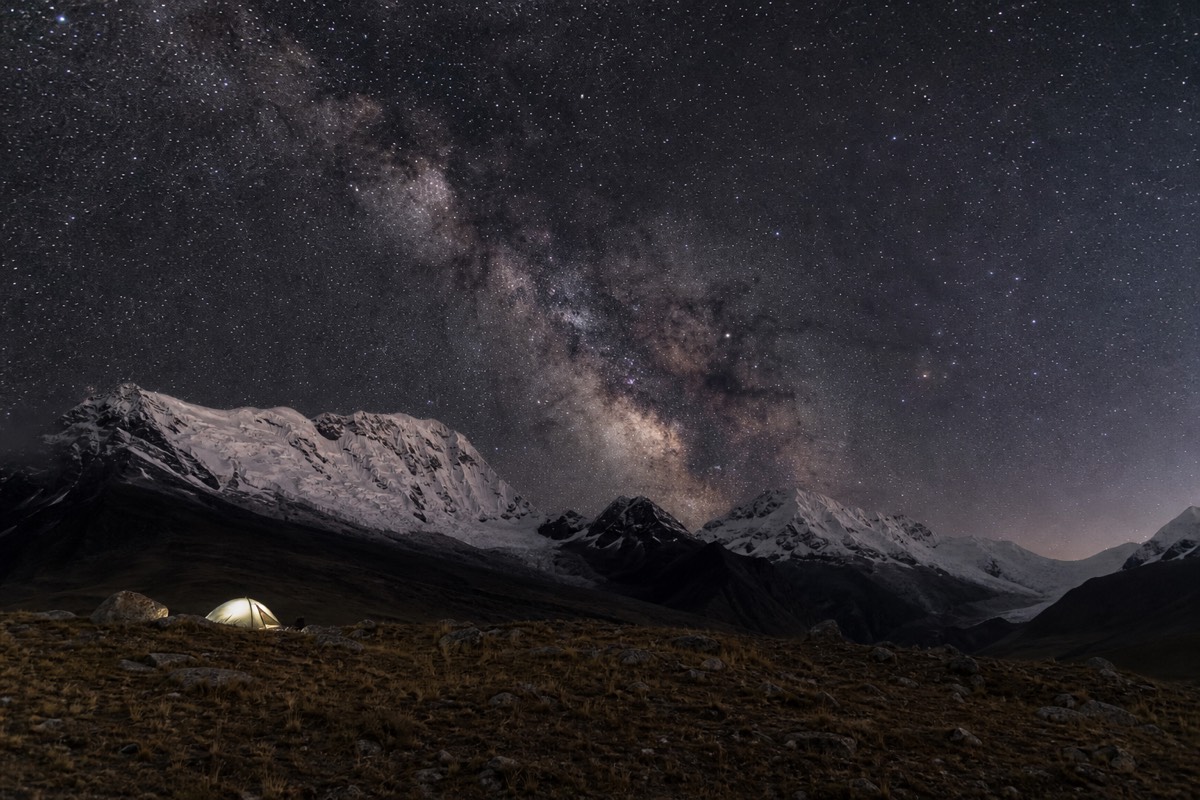
Huayhuash sits well above that. Longer duration aside, the circuit passes through several community lands that each charge an entrance fee, so operators build those into the price and independent trekkers carry extra cash for them. For a full picture of what goes into either number, see what the Santa Cruz Trek costs, which breaks guided pricing against a line-by-line independent budget.
| Cost element | Santa Cruz | Huayhuash |
|---|---|---|
| Guided, typical starting price | from around $390 | substantially higher (length) |
| Park / entry fees | Huascaran NP, 60 soles (3-day) | multiple community fees |
| Days of staff wages | 4 | 8 to 12 |
| Independent feasibility | Straightforward | Possible, more logistics |
| Best value for time | High | High for experienced trekkers |
Neither is a rip-off for what it delivers. Santa Cruz is simply the cheaper way to stand among these peaks, while Huayhuash asks you to pay for the privilege of a much longer and wilder journey.
Which Is More Crowded, And How Remote Does Each Feel?
Santa Cruz is the most popular multi-day trek in the Cordillera Blanca, so expect other groups at camps and on the pass, though nothing like the Inca Trail. Huayhuash sees a fraction of that traffic. You can walk for hours seeing almost no one, which is part of its appeal and part of its risk.
Popularity is a double-edged thing. On Santa Cruz you share the trail and the main camps, especially in July and August, which brings a social feel and means help is near if something goes wrong. The route is remote by everyday standards, yet it is patrolled, well marked, and rarely lonely. For many first-timers that reassurance is worth more than solitude.
Huayhuash trades company for wilderness. The circuit crosses high, empty country where you may not pass another group for a long stretch, and where a twisted ankle or a fast weather change is a more serious matter. That emptiness is exactly why experienced trekkers love it, and exactly why going with a guide, a cook, and mule support is the sensible way to walk it. Both ranges lie under the care of the protected-area authority, SERNANP, which manages Huascaran National Park and the surrounding reserves.
How Much Acclimatization Does Each Demand?
Both need real acclimatization, but Huayhuash needs more. For Santa Cruz, plan two to three nights in Huaraz at about 3,050 m plus a high day hike before you start. For Huayhuash, add extra acclimatization days and ideally a warm-up trek, because you will sleep above 4,000 m repeatedly with no easy escape.
Altitude is the great equalizer in this region. Huaraz sits at 3,052 metres, already high enough that your first days there are working days for your body. Before Santa Cruz, the standard advice is two to three nights in town plus at least one hike to 4,000 metres or higher so the Punta Union climb does not become your first taste of thin air. The classic warm-ups are Laguna Wilcacocha, Laguna Churup, and Laguna 69, covered in the best acclimatization day hikes.
Huayhuash raises the stakes. Because camps stay high for a week or more, arriving under-acclimatized is not just uncomfortable, it is dangerous. Many trekkers do Santa Cruz or a string of day hikes first, then start the circuit already tuned to altitude. That extra week of preparation is one more reason Huayhuash is a bigger commitment than its trail distance alone suggests.
| Acclimatization step | Santa Cruz | Huayhuash |
|---|---|---|
| Nights in Huaraz before | 2 to 3 | 3 or more |
| Warm-up day hikes | Recommended | Strongly recommended |
| Prior high trek | Optional | Ideal (e.g. Santa Cruz first) |
| Nights above 4,000 m on trek | 1 to 2 | Most nights |
No circuit booking guarantees acclimatization. Allow separate preparation days and avoid starting either route with unresolved altitude symptoms.
What Is The Best Season For Each Trek?
Both run in the Andean dry season, roughly May to October, with June to August the driest and clearest. Santa Cruz has a slightly more forgiving window because it is shorter and lower. Huayhuash's longer, higher exposure makes the peak dry months matter more. The wet season, November to April, brings cloud, rain, and snow risk on the passes.
Season decides how much you actually see, and on these treks the view is the whole point. The dry season delivers the cloudless skies and hard visibility that put Alpamayo, Taulliraju, and the Huayhuash giants on full display. June, July, and August are the safest bets for clear passes and dry trails, at the cost of busier camps, especially on Santa Cruz during the international summer holidays.
The shoulder edges, May and September into early October, trade a little weather certainty for thinner crowds and often lovely light. The wet season is a different proposition. Afternoon rain, mud, and the real chance of snow closing a high pass make November to April a gamble, more so on Huayhuash, where you are exposed to that risk day after day rather than once. If flexibility on dates is possible, aim both treks at the dry-season core.
| Season | Santa Cruz | Huayhuash |
|---|---|---|
| Peak dry (Jun to Aug) | Clearest, busiest | Best window, still quiet |
| Shoulder (May, Sep, early Oct) | Good, fewer people | Good, watch early snow |
| Wet (Nov to Apr) | Cloud, rain, pass risk | Higher risk, long exposure |
Whichever range you pick, matching your dates to the dry season is the single biggest thing you can do to improve your chance of seeing the scenery both treks are famous for.
Can You Shorten Either Trek If You Are Short On Time?
Yes, both have shorter versions. Santa Cruz has a popular three-day accelerated itinerary that still crosses the Punta Union pass, suited to fit, acclimatized hikers. Huayhuash offers mini-circuits of roughly four to eight days that sample the range without the full loop. Both shortcuts trade rest days and weather margin for speed, so they favour stronger trekkers.
If your calendar is tight, you are not automatically shut out. The Santa Cruz Trek compresses well into three days by lengthening the daily distances, and it keeps the trek's signature moment, the crossing of Punta Union at 4,750 metres, with its views of Alpamayo and the Santa Cruz massif. The catch is a harder pace, more elevation packed into fewer days, and less buffer if weather or altitude slows you, so it is best for people who are already fit and acclimatized.
Huayhuash also flexes. Rather than the full eight-to-twelve-day loop, operators run shorter four-to-eight-day circuits that hit a selection of the best lakes and passes and exit early, giving a strong taste of the range for those who cannot commit to the whole thing. It is a fair compromise, though it inevitably leaves some of the circuit's finest corners unseen. For the classic four-day plan on the accessible side, the day-by-day Santa Cruz Trek itinerary lays out the standard version most people walk.
The reviewed choices are four-day Santa Cruz and ten-day Huayhuash trips. Neither is a verified three-day trek or a mini-Huayhuash circuit; keep those shorter requests separate.
Who Should Choose Santa Cruz, And Who Should Choose Huayhuash?
Pick Santa Cruz if you have four to six days in Huaraz, want a reliable first big Andean trek, and value comfort, support, and one unforgettable pass. Pick Huayhuash if you have two weeks, proven trekking fitness, and crave remote, sustained wilderness. Many people do Santa Cruz first and graduate to Huayhuash on a later trip.
Santa Cruz suits the traveller on a normal holiday clock: it fits inside a week including acclimatization, forgives a modest fitness base, and hands back a huge payoff for the effort. It is the right call for first-timers at altitude, for anyone short on days, and for people who want the logistics carried so they can focus on the walking. Families with fit older teens and solo travellers wanting company also lean here.
Huayhuash is for the trekker who has done this before and wants more of it. If you have already slept high, walked long days back to back, and want scenery with no crowds and no easy bail-out, the circuit is a career-highlight trek. Those chasing the ultimate high-altitude project can look further still, to the 20-day Alpamayo and Chopicalqui expedition, which pairs the Santa Cruz valley with technical summits for experienced mountaineers.
| You are... | Best fit |
|---|---|
| New to multi-day altitude trekking | Santa Cruz |
| Short on time (under a week) | Santa Cruz |
| Wanting the biggest single view for the effort | Santa Cruz |
| An experienced trekker chasing remoteness | Huayhuash |
| Able to give it 10 to 14 days total | Huayhuash |
| Building toward technical peaks | The 20-day expedition |
There is no wrong answer between two of the best treks in South America. The honest guidance is to match the trek to your days and your legs: Santa Cruz to start, Huayhuash to go deeper. Whichever you pick, the Cordillera Blanca and its neighbour reward the trekkers who prepare for them.