Santa Cruz Trek Without A Guide: Self-Guided Route, Permits & Costs
You can legally walk the Santa Cruz Trek on your own, and plenty do. Here is what a self-guided trek really involves, from the park fee to the pack weight, and when hiring a guided trip is the smarter call.
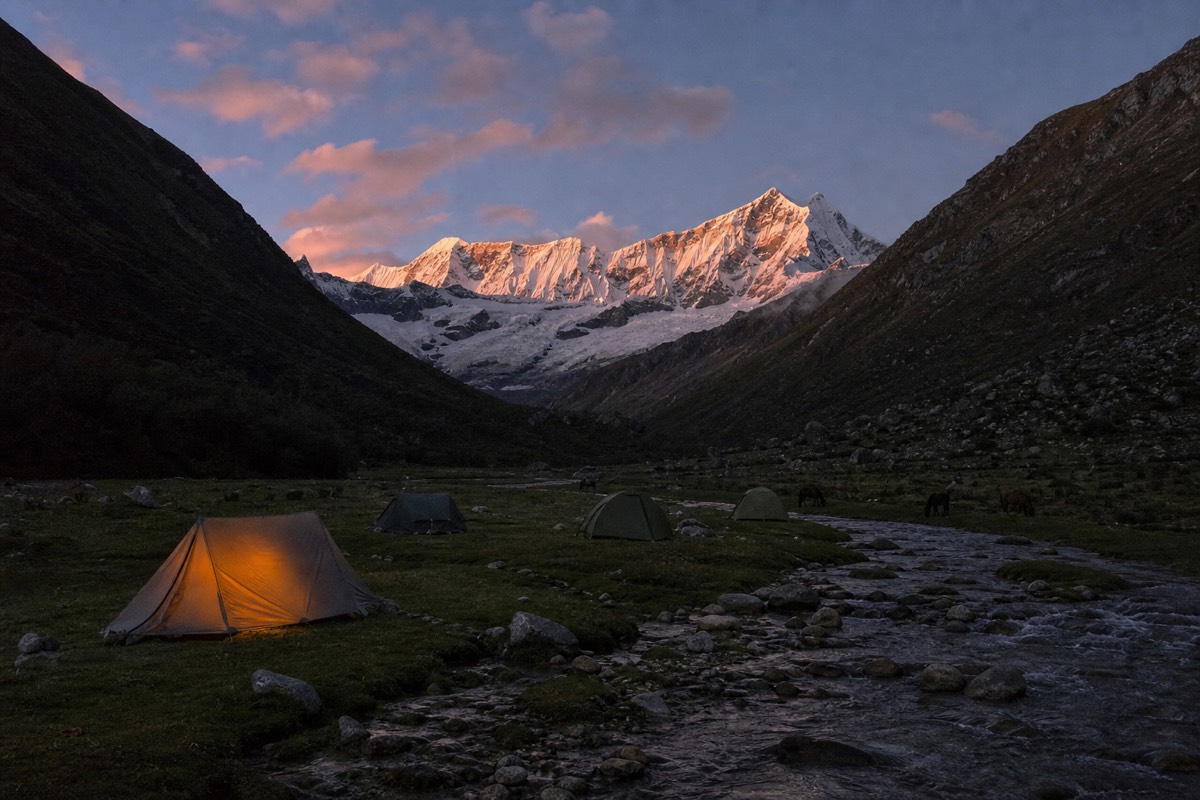
The Santa Cruz Trek is one of the few world-class multi-day routes you can still walk without booking anything months ahead. There is no permit lottery, no mandatory guide, and no quota. That freedom is real, and it is also the reason unprepared walkers get into trouble on the pass. This guide lays out the self-guided version honestly, then makes the case for when a guided trip is worth the money.
Keep preparation days separate from the booked itinerary. A supported Santa Cruz crossing combines four days of camps and walking with transport from Huaraz.
Booking Choice: Choose the route, allow time to adjust to altitude, then compare the full quote including excluded fees and personal gear. View Four-Day Santa Cruz Trek
What you carry: independent versus guided
Guided daypack weight from the operator listings, where porters and mules carry the camp gear. The independent load is a planning estimate for a self-supported walker.
Can You Legally Do The Santa Cruz Trek Without A Guide?
Yes. The Santa Cruz Trek is an open public trail inside Huascaran National Park, and no law requires a guide, unlike the Classic Inca Trail. You pay the park entrance fee at the ranger station and walk. The route has no daily permit cap, so you can arrive in Huaraz and start within a day or two.
This is the first thing to get straight, because the two most famous treks in Peru work in opposite ways. The Inca Trail to Machu Picchu is capped at 500 permits a day and legally demands a licensed guide and porters. The Santa Cruz has neither rule. It sits inside Huascarán National Park, a UNESCO World Heritage Site, on a trail that is public and unrestricted beyond the entrance fee. Experienced, self-sufficient trekkers do it independently every season, and the range is genuinely welcoming to them.
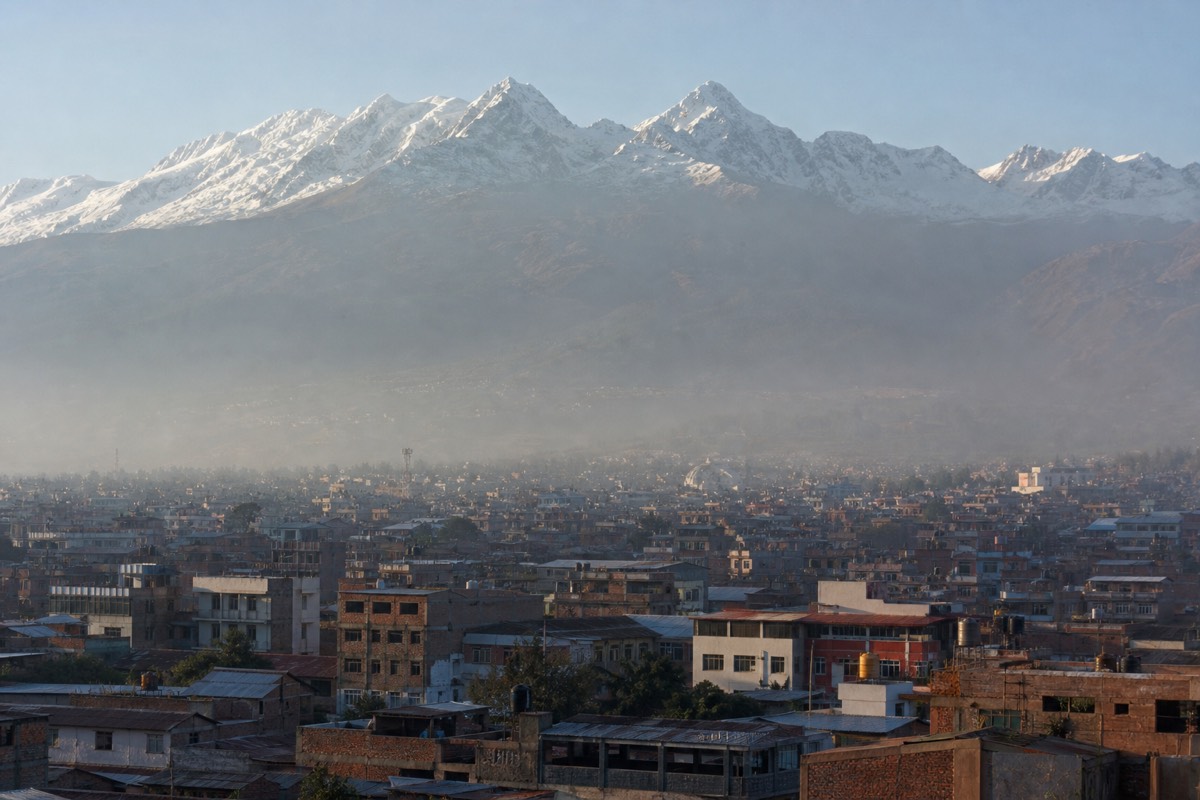
That said, legal and advisable are not the same word. The absence of a rule does not lower the altitude or soften the weather, and the same terrain that a strong independent walker enjoys is where a first-timer without high-altitude experience runs into trouble. If you are still choosing a route, our overview of Cordillera Blanca treks from Huaraz sets Santa Cruz next to the alternatives, and the day-by-day Santa Cruz Trek itinerary shows exactly what you would be taking on alone.
What Permits And Fees Do You Need For A Self-guided Trek?
You need one thing: a Huascaran National Park entrance ticket, paid in cash at the ranger station. Fees are set by SERNANP, the national park authority. A four-day trek exceeds the single-day ticket, so foreign trekkers buy the multi-day pass, around 150 soles, roughly $40. There is no separate camping permit and nothing to book online in advance.
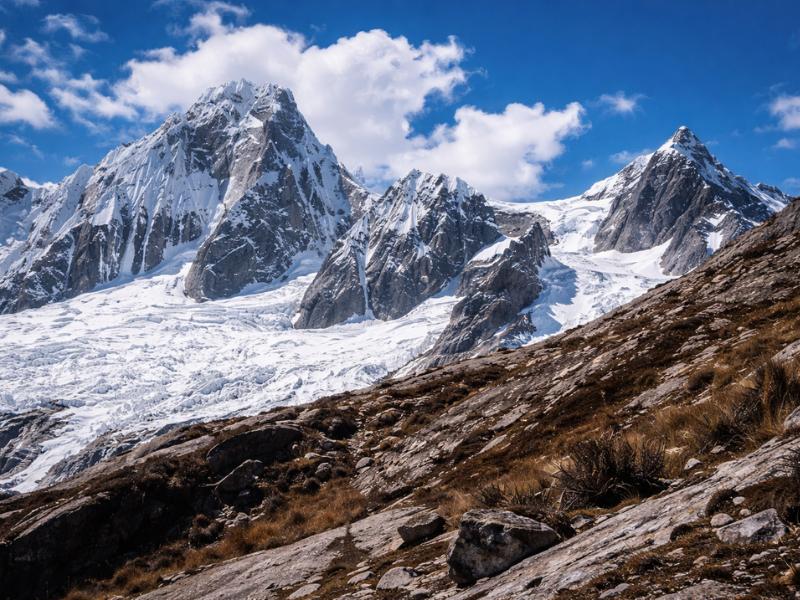
The park fee is the only official cost you cannot avoid, and it is straightforward once you know the tiers. SERNANP, the national park authority, sells a daily ticket and a longer multi-day ticket, and because the Santa Cruz Trek runs four days you need the multi-day one. Rates change, so treat the figures below as the current shape rather than a fixed quote, and carry the exact cash in soles because cards are not accepted at the gate. Keep the physical ticket: rangers check it at control points along the route.
| Ticket | Foreigner | Peruvian | Child (5 to 16) |
|---|---|---|---|
| Daily entry | Around 30 soles | Lower rate | Reduced |
| Multi-day (covers a 4-day trek) | Around 150 soles | Around 75 soles | Around 35 soles |
| Payment | Cash in soles only, at the Cashapampa ranger station or the SERNANP office in Huaraz | ||
Confirm the current rate at the gate or the SERNANP office before you go, since the amounts are adjusted from time to time. Beyond this ticket, nothing official is required to camp at the designated sites.
How Do You Get From Huaraz To The Trailhead On Your Own?
Reach Cashapampa from Huaraz by shared colectivo via Yungay, roughly PEN 30 to 60 per person one way, or by private taxi at PEN 200 to 400 for the vehicle. The drive is about two to two and a half hours. Getting back from Vaqueria at the far end is the harder half, so plan the return before you start walking.
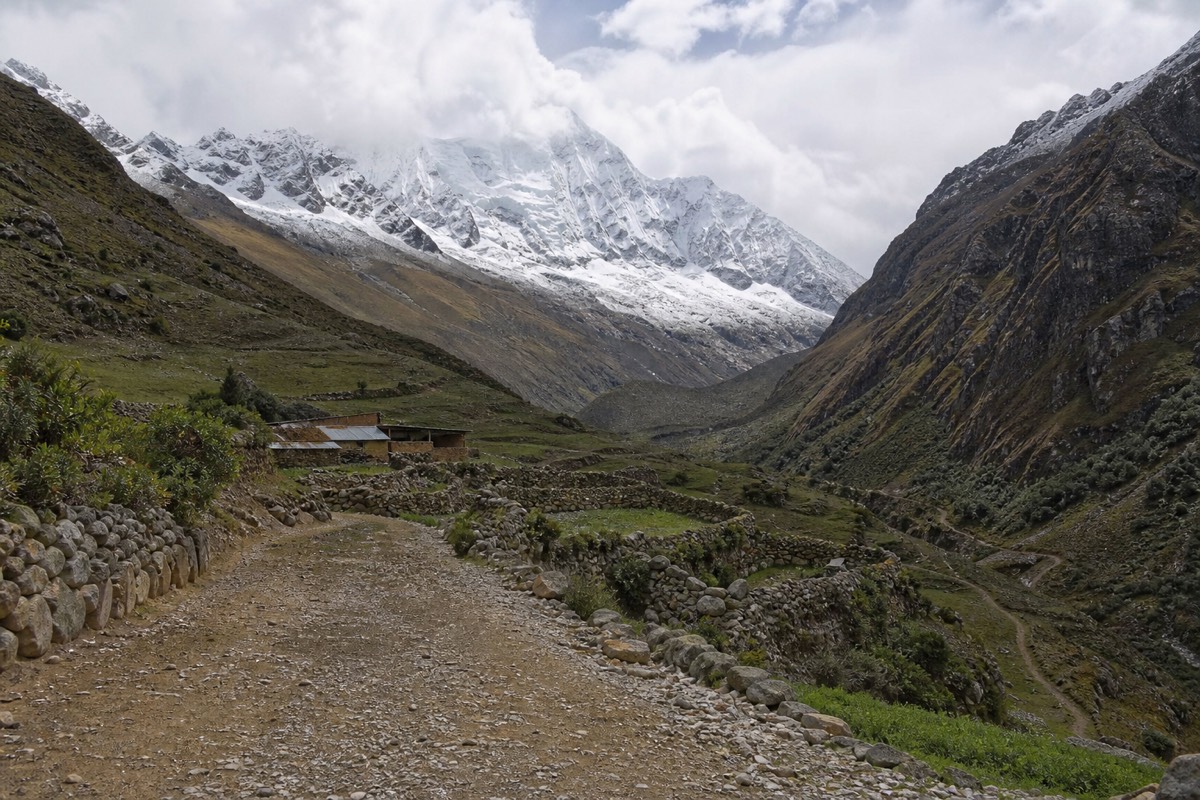
Independent transport is doable but takes patience. The standard budget route to the Cashapampa trailhead is a minibus or colectivo from Huaraz to Yungay, then a local vehicle up to Cashapampa, which is cheaper but slower and depends on vehicles filling. A private taxi arranged through your hostel is faster, runs door to door, and makes sense if you are in a small group splitting the fare. The trickier logistics are at Vaqueria, the northern exit, where transport is thinner and less frequent. Our guide on how to reach the Cordillera Blanca covers the Lima to Huaraz leg and the trailhead transfers in more detail.
| Option | Approx. cost | Time each way | Notes |
|---|---|---|---|
| Shared colectivo via Yungay | PEN 30 to 60 / person | 2.5 to 3.5 hrs | Cheapest, waits to fill, may change vehicles |
| Private taxi with driver | PEN 200 to 400 / vehicle | 2 to 2.5 hrs | Door to door, best for small groups |
| Return from Vaqueria | Varies, arrange ahead | 3 to 4 hrs | Fewer vehicles, plan before you leave |
Many independent walkers pre-book a private return pickup at Vaqueria for a set date and time, because being stuck at a remote roadhead after four days is a poor way to end the trek.
What Gear And Food Do You Need To Carry Yourself?
Going self-guided means carrying everything: a four-season tent, a sleeping bag rated to around minus 10, a mat, a stove and fuel, four days of food, water treatment, and full cold-weather layers. That is a 15 to 20 kilogram pack. Gear can be rented cheaply in Huaraz, but you still carry it over a 4,750 metre pass.
The equipment list is where the independent trek gets physical. On a guided trip, mules and porters move the tents, food and cooking gear, and you walk with a light daypack. Alone, all of it is on your back, and every kilogram is felt more sharply at altitude. Huaraz has a strong cluster of rental shops where tents, sleeping bags, mats and stoves are inexpensive by the day, so you do not need to fly in loaded, but the weight on the trail is the same whether you own or rent it.
| Category | What to carry |
|---|---|
| Shelter and sleep | Four-season tent, sleeping bag to around minus 10, insulated mat |
| Cooking | Stove, fuel, pot, lighter, four days of food |
| Layers | Insulated jacket, waterproof shell and pants, warm hat, gloves |
| Water and safety | 2 to 3 litre capacity, purification, first-aid kit, headlamp |
| Navigation | Offline or paper map, phone with downloaded route, power bank |
Buy your food in Huaraz before you leave, since there are no shops on the route. Nights at the high camps drop to zero or below, so the warm layers are survival kit, not comfort items, and the waterproof shell needs to be reachable because the weather on the exposed sections can turn from clear to snowing in half an hour.
How Do You Handle Water, Altitude, And Safety On Your Own?
Treat all water from streams and lakes before drinking. Altitude is the real hazard: the pass sits at 4,750 metres, and acute mountain sickness can hit regardless of fitness. Acclimatize in Huaraz first, climb slowly, and be ready to descend. Alone you have no guide carrying oxygen, no radio, and long stretches with no phone signal.
Self-guided safety comes down to respecting altitude and having a plan for when things go wrong. The single biggest risk on the Santa Cruz is acute mountain sickness, which the CDC altitude sickness guidance describes as unpredictable and only loosely tied to fitness. The defence is the same whether guided or not: spend two or three nights acclimatizing in Huaraz before the trek, gain height slowly, drink well, and turn back if symptoms build rather than pushing through. The difference when you are alone is that no one is monitoring you, and the trail has remote sections with no signal, river crossings, and cold, exposed camps.
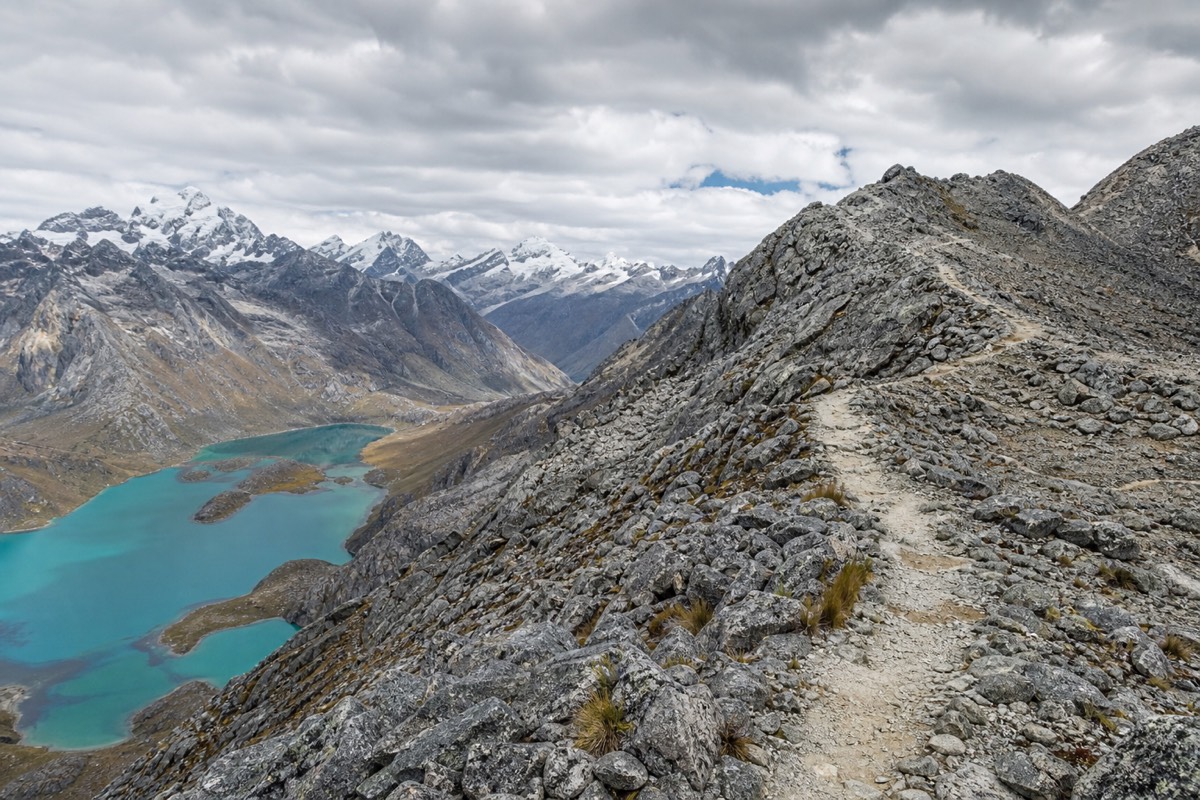
Carry a small first-aid kit, water treatment, and ideally a satellite messenger for the sections beyond phone coverage. Petty theft of unattended bags at camps is the only real crime concern, and the trekking area itself is remote and largely free of it, which is part of why solo travellers, including solo women, report feeling secure on the route. If general safety in the region is on your mind, we cover whether Huaraz is safe for tourists separately. The table below is the honest risk checklist for going alone.
| Risk | Why it matters solo | How to manage it |
|---|---|---|
| Altitude sickness | No guide with oxygen or judgement | Acclimatize first, climb slow, descend early |
| Water | Untreated stream water can make you ill | Filter or purify everything you drink |
| No signal | Long stretches with no phone coverage | Carry a satellite messenger, share your plan |
| Weather | Snow and wind on the pass, no one to reroute you | Waterproof layers, flexible dates, turn-back rule |
Know the early signs so you can act on them. A headache that will not shift, nausea, dizziness, and broken sleep are the common markers of acute mountain sickness, and the safe response is always the same: stop climbing, and if it worsens, lose altitude. On a guided trip a guide makes that call for you. Alone, you make it yourself, honestly, before a rough night at 4,250 metres turns into something more serious. Never climb higher to sleep while symptoms are still building.
None of this is meant to scare you off. It is the reality that guided crews handle in the background, and doing it yourself means owning all of it.
What Does A Self-guided Santa Cruz Trek Actually Cost?
A self-guided trek is cheaper on paper, often around $80 to $160 per person once you add the park fee, shared transport, four days of food, and gear rental in Huaraz. Owning your gear pushes it lower; renting a full kit and taking private transport pushes it higher. The guided four-day trek starts around $390 with listed inclusions and separate extras.
The appeal of going alone is mostly financial, so it helps to see where the money goes. The park fee and food are fixed and small. Transport swings the total depending on whether you share a colectivo or hire a private vehicle. Gear rental is the wildcard: if you already own a tent, bag and stove, your costs are tiny, and if you rent the full kit for four days, it adds up. The figures below are planning allowances, not quotes, and they exclude your accommodation in Huaraz before and after.
| Item | Self-guided estimate |
|---|---|
| Huascaran park entry (multi-day) | Around 150 soles, roughly $40 |
| Round-trip transport | $15 to $60 per person, shared to private |
| Food for four days | $15 to $30, bought in Huaraz |
| Gear rental (if needed) | $0 if you own it, up to $60 for a full kit |
| Rough total | Around $80 to $160 per person |
For the full picture, including how the guided price is built and what it buys, see what the Santa Cruz Trek costs. The headline is that the saving is real but smaller than people expect, and it comes with a heavier pack and a longer to-do list.
Self-guided Or Guided: Which Should You Choose?
Go self-guided if you have solid high-altitude experience, own or can rent the gear, and want the challenge and the saving. Go guided if you want the mules to carry the load, a guide watching for altitude symptoms, transport and permits handled, and a hot meal at camp. For most first-time Andean trekkers, guided is the easier and safer path.
This is the honest trade-off. Independent trekking on the Santa Cruz is rewarding and affordable, and for a seasoned walker it is a fine way to do the route on your own terms. For everyone else, the guided version removes exactly the parts that make the trek hard: the weight, the logistics, and the altitude judgement. On the guided 4-day Santa Cruz Trek, porters or mules carry the tents and food, a cook produces hot meals, transport to Cashapampa is arranged, the park fee must be checked separately, and a guide sets the pace and carries oxygen. The Santa Cruz Llanganuco trek does the same as a private trip with hotel-to-hotel transfers and donkeys for your personal gear.
| Factor | Self-guided | Guided |
|---|---|---|
| Pack weight | 15 to 20 kg, everything on you | 5 to 8 kg daypack, mules carry the rest |
| Altitude support | None, you self-monitor | Guide watches symptoms, carries oxygen |
| Logistics | You arrange transport, food, permits | Transport and listed meals; confirm park fees separately |
| Cost | Around $80 to $160 / person | Check per-person quote and extras |
| Best for | Experienced, self-sufficient trekkers | First-timers and anyone wanting it easier |
Neither choice is wrong. Match it to your experience honestly.
Who Should Not Attempt The Santa Cruz Trek Solo?
Skip the self-guided version if this is your first multi-day trek, if you have no experience above 4,000 metres, if you are unsure about carrying a heavy pack over a high pass, or if you are travelling on tight dates with no weather buffer. The altitude and the remoteness punish inexperience harder than any technical difficulty on this route.
The Santa Cruz is not a technical climb, and that lulls some people into treating it casually. There are no ropes and no exposure that needs a head for heights, but the pass is higher than almost anywhere most travellers have walked, and the valleys are remote enough that a mistake is slow to fix. If you have never slept above 4,000 metres, never carried a full expedition pack for days, or never managed your own altitude symptoms, the first time to learn is not alone in Huascarán National Park. Book a guided trip for this one, build the experience, and come back for the independent version later if the idea still appeals.
There is also a middle path worth naming. Some walkers hire a guide or an arriero, a local mule driver, for the load and the route knowledge without booking a full packaged tour, which cuts the pack weight and adds a margin of safety while keeping the cost closer to independent. It is a common arrangement in Huaraz and a sensible step up from going fully alone if the solo version feels like a stretch.
For a great many visitors, the smart move is to keep the freedom of the Santa Cruz, the no-permit, arrive-and-go simplicity, while letting a local crew carry the load and watch the altitude. That is the version that gets almost everyone to the pass with energy to enjoy it. Line up your acclimatization, read the day-by-day itinerary, and decide with clear eyes which side of the guided line you belong on.